


Interview Q&A with Aleksandra Velikova
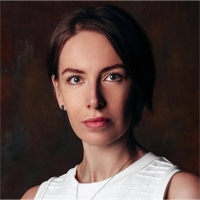
We present our first exclusive Q&A Interview with Aleksandra Velikova, whose literary works have graced our Spillwords pages and earned her the title of August’s 2026 Author of the Month.
- What does it mean to be selected as Author of the Month?
For me, above all, it is a very personal confirmation that my stories really do find their way to readers. It means even more because the choice was made by Spillwords readers themselves. I only started publishing in English relatively recently, so this nomination came as both a surprise and something incredibly meaningful to me. It gives me the feeling that a story written in one country, originally in another language, can still be understood and felt deeply by people whose lives and experiences may be completely different from my own.
- How have your friends and/or family influenced your writing?
Perhaps most of all by giving me an endless source of observations about human relationships. I have always been interested not so much in the event itself as in what happens between people: what they say to each other, what they leave unsaid, why they love each other and still part, why they sometimes do something completely different from what we expect of them. The people closest to us inevitably teach us to look at another person more carefully — and for a writer, that is invaluable.
- What inspires and motivates you to write?
I am inspired by people and by moments that have no simple answer. Love, memory, loneliness, moral choices, relationships that cannot simply be defined as happy or unhappy. I am especially fascinated by the way the past continues to exist inside the present.
Sometimes the spark can be something very small: a random phrase, a piece of music, the face of someone I see on a train, a detail in a room. And suddenly, behind that tiny thing, an entire story begins to emerge.
- Can you tell us about the catalyst that sparked your writing journey?
I started writing very early: poetry when I was about seven, and stories when I was around twelve. Then, adult life took me in a very different direction for many years. I became a pathologist, went into science and teaching, and only returned seriously to literature after forty.
At some point, I think I realized that one life simply wasn’t enough for me. I wanted to live several at once: the life of a doctor, a writer, a musician. Writing became a way of living through other lives and asking questions that a single human lifetime doesn’t give us enough time to explore.
- Please share a glimpse into your writing process.
Usually, it begins not with a plot but with a single scene, or even a single image. I might see a room very clearly, hear a few lines of dialogue, or suddenly know exactly what someone is feeling in a particular moment — while having absolutely no idea what happened before that or how the story will end. Then, little by little, the rest of the story grows around that scene.
I rewrite a lot. The rhythm of a sentence, the intonation of dialogue, the precision of a detail — all of these matter enormously to me. Sometimes I can spend a long time changing just a few words simply because I can hear that the sentence still doesn’t sound right. Music has probably had a strong influence on the way I write prose as well.
- What do you find most fulfilling about the act of writing?
I love my characters very deeply. I love stepping into them when I write dialogue, almost playing them as an actor would, literally living their lives for a while — crying for them, laughing with them. That is what truly motivates me to write. For me, that is creativity in its purest form.
It is also why I am so drawn to screenwriting. I dream of seeing my stories adapted for the screen, because I naturally think in scenes, almost as if I were watching a film in my head.
- How does the use of imagery contribute to conveying your story?
For me, a story always begins with falling in love with a character. Everything else grows around that person — and quite often begins to happen independently of me. So the character is the center of the universe in my stories: their heart and their driving force at the same time.
I like imagery that doesn’t tell the reader what they are supposed to feel, but instead creates a space in which they can feel it for themselves. Perhaps that is why my stories contain so much light, color, music, city landscapes, and ordinary objects that gradually begin to carry another layer of meaning.
- What is your favorite reading genre?
Most of all, I love psychological fiction — books in which the most important things happen not through external action but inside a person and between people. I am drawn to stories where no one is entirely right or entirely wrong, and where the same situation can contain several different truths. I suppose that is also the kind of literature I am most interested in writing.
- What human being has inspired you the most?
It is difficult for me to name just one person. At different times in my life, I have been inspired by very different people — writers, musicians, doctors, teachers, and people I have simply met in everyday life.
Perhaps what inspires me most is a certain kind of person: someone who continues to create despite circumstances, age, failure, and the fear of starting again. That is a very important theme for me, both in life and in literature.
- What message would you have for the Spillwords Press community that voted for you?
First of all — thank you. I am truly touched by your choice. When you send a story into another country, in another language, there is no way of knowing whether it will ever find its reader. So knowing that someone read my stories, remembered them, and chose to give me their vote means a great deal to me.
Thank you to Spillwords for creating a space where people from different countries can meet through literature. And thank you to every person who has read my work. Perhaps it is precisely for this invisible meeting between writer and reader that we write in the first place.
- What would you like your legacy as a writer to be?
It isn’t so important to me that I myself should be remembered for a very long time as a writer. What matters much more is that at least one story might remain with someone — a story they may remember one day at exactly the right moment in their own life.
I would like to write stories that make a reader think about another person for a little longer — perhaps become slightly less certain of their immediate judgments, and a little more attentive to someone else’s pain, love, or choices. If my stories can do even that, I think it would be enough.
- Is there anything else you would like to add?
Perhaps just one thing. For a long time, I believed that I had largely missed my chance when it came to literature. I began writing as a child, but returned to it seriously many years later. So everything that is happening now — publications, readers, the opportunity to write for an international audience — is also proof to me that it is never too late to return to something you truly love.
And sometimes a second beginning turns out to be far more interesting than the first.
- Interview Q&A With Aleksandra Velikova - September 17, 2026
- The Secret of Peter Barrie - August 29, 2026
- A Rare Case - June 4, 2026