

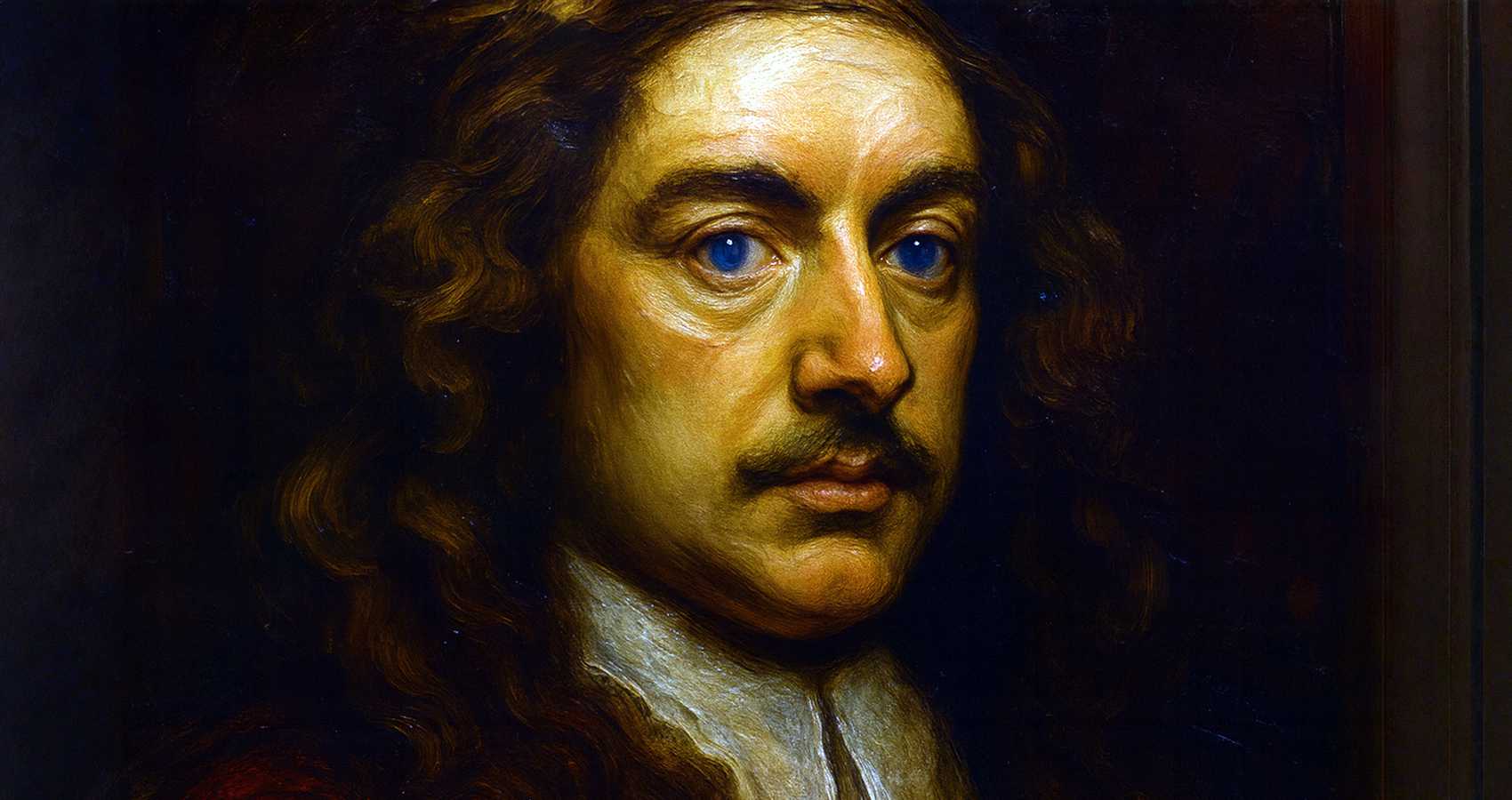
James II
(All-Inclusive King)
written by: Adelino Carbonera
Folco Azzoni Scotti arrived early at the Central Station and stood gazing at the sparse shop windows to pass the time while waiting.
He began wandering through the corridors, rejoicing in the efforts he had made so far, exclaiming aloud without caring about attracting the attention of passersby.
He boarded the carriage, catching a glimpse from the platform of a man in the distance with a red hat and a raised signal paddle.
His train traveled the long Milan-Mestre route, making the usual intermediate stops, and arrived at its destination at exactly ten o’clock.
Stepping onto the platform, he rubbed the tips of his shoes against his trousers, one after the other, and dragged himself with his luggage toward the stairs of the underpass, letting his former travel companions pass by.
The wait for the connection was brief. He had time to marvel at an elderly couple who seemed smuggled in from another era, leaning against the schedule board. The man, shaken by the cold, looked stunned, wearing a gray overcoat and a Napoleonic-style hat, while the woman stood still, wrapped in a maroon coat, her arms dangling forward, her face half-hidden by a woolen cap.
During the eighteen minutes that separated him from Treviso, he overheard someone behind him talking incessantly on the phone.
“Let me read the play again. – Another signature?! – Just a moment: the work plan for next week – No, no, it’s unthinkable that the six people in the company can weave the plotlines in just six days – We’re not promising anything big – Honest people, you say?! – And how could our words harm him if he has a clear conscience?”
After passing a row of shops with a mix of merchandise in the windows, he stopped on Lungosile Mattei in front of a small building with a white plastered façade, where the remnants of two brick arches were still visible.
He pushed the iron gate and, after crossing the small garden, stopped in front of the anthracite gray front door with an elliptical glass panel in the center.
He unlocked it with the master key that had been sent to him by courier and climbed to the first floor.
Walking down the hallway, he glanced into two mirrors with frames studded with colored circles and noticed paintings of moored boats.
Upon entering the apartment named “The World,” he approached the coat rack with shelves, placed his duffel bag and briefcase on top, took off his coat, and looked around.
The first room, shaped like an irregular trapezoid, gave him a distorted perception of perspective. The two-door wardrobe with a bookshelf was positioned to the left, a table with harp-shaped legs and four chairs with pierced backs stood opposite, while a wooden sideboard and a curved glass coffee table were in the far right corner.
The Venetian-style terrazzo floor and the walls covered with gray-blue fabric and damask in relief, however, seemed to provide the room with a proper visual harmony.
In the other room, he found a French bed and a large globe beside the window.
He looked outside and saw the placid river flowing by, its waters a deep green, with rows of maples lining the banks.
He paced back and forth between the two rooms, focusing on the remaining objects.
A small credenza, a golden statuette of a Moor, a bedside table with a light compartment and a drawer in baroque style, various genre paintings depicting scenes of everyday life, and an arched mirror.
Every kind of modern comfort had been arranged in refined, sober spaces. The instruction sheet under the remote control explained where the cases containing the TV, hi-fi, telephone, safe, and minibar were located.
Only when his foot bumped against the doorframe did he realize he was tired and deserved a break.
He felt enveloped by the comforting warmth radiating from the panels on the walls and experienced a strong sense of satisfaction and peace. The creases around his lips and the deep wrinkle on his forehead disappeared.
Folco sat down at the table, put on his reading glasses, placed his case, notebook, and black pen in front of him, then pulled from his jacket pocket the letter that had come with the master key.
He rested his elbows on the armrests and looked at his thin hands, the prominent, bony knuckles.
He coughed a couple of times and sighed.
First, he tore off one corner of the envelope, then another, and finally the edge between the two.
Carefully unfolding the cream-colored, watermarked sheet, he leaned forward, his head craning.
“Dear Dr. Azzoni Scotti,
We are pleased to inform you that, through the generative adversarial network, the famous character you will represent during the Mardi Gras ball at Palazzo Pisani on the first of March has been selected. Your morphological and personality traits inserted into the program have shown a strong and positive correlation with a 17th-century English monarch. The result, we believe, aligns with your expectations. Here is the name: James II Stuart, King of England, Scotland, and Ireland. The complete biography is available in the library. Alongside it, you will find the biography of his second wife, Maria Beatrice d’Este.
Note: they were the last Catholic monarchs of England.
Our next appointment is confirmed. The costumes and everything you need will be delivered on that occasion.
See you soon.
Regards,
Trotta.”
Folco reread the letter, still incredulous. He opened his leather briefcase, took out a stamp and ink pad, dipped the stamp in the ink, and pressed it firmly onto the page: Approved. He returned the letter to the envelope and left it on the table.
He put on his coat, took a folder from his briefcase, descended the stairs, and went outside.
Crossing the bridge to the left, he enjoyed the cold, dry wind caressing his face, and walked for hundreds of meters, encountering only a few scattered people, until he reached Piazza Vittoria.
Curious, he approached the grand monument dedicated to the fallen, located in the center of a large flowerbed.
He circled the complex of sixteen bronze statues, showing young people and women mourning as they accompanied the fallen to his final journey.
That scene stirred great emotion in him, as if it had touched a deep chord in his heart.
The huge fluted columns at the four corners evoked another profound feeling in him—the desire for glorification, the only condition capable of securing salvation for the soul.
Crossing the street, he entered the Post Office and, almost slipping, lined up behind a large woman wearing a pair of huge gold and coral earrings.
He sent the package containing the translation of John Middlesbrough’s book Alternatives to Silence to the publisher in Florence, and after leaving the square, he began to wander around the city.
He didn’t worry about losing his way and entered the small streets where the buildings were huddled together, partially dominated by towers.
The narrow, late-medieval alleys revealed houses with Gothic windows and corbels jutting from the walls, while the Cagnani canals reflected the beauty of the palaces in the water.
Here, unlike Hummel, the old vampire from the Strindberg drama he had recently reviewed in a literary magazine, he did not pass through door cracks like a ghost, nor did he disturb the life of any passersby, for at that moment, he did not feel the need to dominate anyone.
Reaching the Buranelli, he stopped in front of the house of Giovanni Comisso, writer and poet, a former friend of the sculptor Martini and the painters De Chirico and De Pisis.
The square-shaped building, pale pink and weathered by time, had two doors and two balconies adorned with flowers overlooking the waterway.
The great peace and clear air afforded him an extraordinarily sharp vision, purified of tensions, worries, and obligations.
Folco recalled reading the chronicles of Comisso’s travels, lived in the constant search for his own roots. The chronological development of events always corresponded to the geographical journey for him, understood as a metaphor for life.
A continuous echo of departures and arrivals, as well as abandonment and ecstasy.
He resumed wandering but soon stopped in front of an antique shop window, curiously observing a shelf filled with clocks of all kinds and sizes.
Once inside, he searched through the displayed objects for something exotic or even a good luck charm.
In the end, he chose to purchase a silver link bracelet with a clasp and nine charms, including a lily, a trumpet, and Moses with the tablets. He wore it and admired it, then as he walked, he grew absorbed in giving each charm the meaning that suited him best.
Having found the connections, he stopped and looked around, uncertain of where to go.
On Corso del Popolo, the buildings were modern, anonymous, and uncoordinated with one another. Cars cruised by at a steady speed, accentuating the sense of ordinariness.
Folco headed toward a church with a modern façade situated in a small square.
Upon entering, he was surprised by the bold architecture. Two enormous tree-shaped columns rose crookedly toward the dome and forward toward the apse, supporting the entire structure of the single nave. The walls were made of red brick.
He sat down in the front pew.
Enchanted, he remained contemplating the frescoes behind the altar.
While he was lost in thought, a woman appeared, followed by a young tourist with a pair of cameras with super-zoom lenses slung over his shoulder.
Finally, a priest.
The latter went to sit at the other end of the bench. He began reading a breviary aloud in a low voice.
He closed it on the Letter of St. Paul to the Colossians, at the passage: “See to it that no one takes you captive through hollow and deceptive philosophy, which depends on human tradition.”
He stood up, walked around the bench, and approached Folco.
“Good day, we are nearing closing time. Can I help you?”
Folco looked at him. He had watery blue eyes and a long nose with narrow nostrils. Roughly the same age as him.
The priest smiled, waiting for a response.
“In less than a week, I will be King of England!”
The other stopped smiling and stared at him, aghast.
“Already today, I will meet supporters and followers. I will begin deepening all my skills.”
The priest adopted an embarrassed expression.
“Has something happened to the reigning monarch?…”
Folco paused for a long moment.
“I have chosen to face this trial, and if the heavens will it, I will meet my destiny, whatever it may be.”
The priest was astonished by those words, which evoked a deep unease, yet revealed an altered state of consciousness.
Folco’s face seemed to float in the air, caught in a play of light and shadow, as the rays streaming through the slits in the walls had created a contrast of effects.
“It’s a responsibility of great magnitude, rather daunting,” said the priest, not sure where to steer the conversation.
“I have engaged in introspection for months, I have found the right consonance between the frequency of desires and the density of thoughts, mastered my impulses, and arrived here ready, willing to assume the identity fate has reserved for me,” replied Folco, his voice shifting in tone, first sharp then more open and modulated, as if to win the priest’s favor.
“Often we recognize ourselves in change, when we shed our skin. We are surprised to find that life has started moving again,” the priest added, trying to instill courage, though he hadn’t fully grasped the meaning of Folco’s words.
“I believe in the ultimate purpose of history, and therefore I think that not only has every event of the past proven essential for the present, but I also think that the present, and likewise the future, are capable of influencing the past,” said Folco formally.
He stood up.
The priest remained motionless, as perplexed as before, if not more so.
He hesitated to respond. He heard a noise, glanced toward one of the side doors, hoping someone had entered, offering an excuse to interrupt the conversation, but saw no one.
He cleared his throat to buy more time, then blushed, ashamed of that intrusive thought.
“Each person’s life has an eternal horizon because Christ is always beside us, showing us the way to go; history evolves, history leads to the fullness of time.”
Folco placed his right hand over his heart, ready to make a judgment.
“History is not complete, but still to be fulfilled. I am its witness. There is a symmetrical balance between past and future, and thus the past also depends on the future, the two dimensions of time are constantly conversing with each other,” he said resolutely, for the first time displaying a broad smile.
“The revelation of a future event is a gift of the Holy Spirit,” added the priest solemnly.
“There are no shortcuts, no detours; to achieve inner harmony, one must rely on the word of the Lord,” the priest continued, nervously placing a hand on his forehead.
“The parallel universe where our ancestors live is also made of matter, and it is there that time flows differently for each of us,” Folco declared, unwilling to back down from the confrontation.
“Each of us has our own story, and many times it is a difficult story, with much pain, many troubles, and many sins. What do I do with my story? Do I hide it? No! These are the words of the Holy Father that can help us understand the meaning of life…” the priest said at last.
Folco felt a moment of emotion. He bit his lower lip repeatedly and blinked rapidly.
The vigorous tolling of the bells echoed.
It was noon.
“I ask a favor before I leave,” Folco said, comforted in his own way by the conversation.
“A blessing, for the journey I must undertake.”
“Just a moment.”
The priest walked away, returning shortly after with quick steps, a green stole over his robe.
As soon as the bells stopped ringing, he recited the prayer.
“… May the Lord who comes to visit us like the rising sun, to guide our feet into the path of peace, be with him… Let us commend this brother of ours to the Lord as he prepares to depart, that he may begin and end his pilgrimage successfully. On the roads of the world, may he praise God, and along the journey of his days, may he offer help and comfort to every person he meets. May the blessing of Almighty God, Father, Son, and Holy Spirit, descend upon him.”
***
After a frugal meal in a diner, Folco returned to his lodging when it was already two o’clock.
He felt relieved upon entering, for the warmth of the place and the sense of belonging to an exclusive world full of opportunities. He sensed a great vitality in his body and knew he had to act immediately to release the tension, before any other desire could distract him from his tasks.
He opened the biography of James Stuart and admired his portraits, after hastily flipping through all the pages. A beardless face with soft features, barely-there mustache, long wavy brown hair, blue eyes, aquiline nose, and a dimple on the chin.
He tore out a sheet and stood before the bedroom mirror. There, he struck a proud and majestic pose, gazing at himself with satisfaction from the front and the side. Finally, he compared himself to the portrait of King James, trying to gauge how similar they were.
Afterward, he sat at the table and made sure to grasp the character traits of the figure he was to portray. Distinguish, separate, share. The three steps to enter the role.
The wavy hair indicated a capable, brilliant, emotional, and often solitary person. The blue eyes expressed jealousy over everything in his possession, yet denoted a kind soul. The aquiline nose showed determination and a readiness for sacrifice, while the dimple on the chin suggested a keen sense of humor.
Folco trembled with emotion, as if a distant rumble was about to be followed by a thunderclap nearby, a prelude to the sky opening its floodgates. He tried to understand what set him apart from the sovereign.
His hair was curlier, puffier, and lacked luster. His eyes leaned more towards gray, revealing his fickle nature, often inconsistent in actions and decisions. His own nose did not fit the proportions of his face but still gave him a determined and authoritative expression, while the dimple in his chin could inspire a sense of sympathy in others. Lastly, his lips were thin and bright red, curiously feminine.
He tried to relax in the chair, spreading his legs, then closed his eyes, thinking about those no longer in his life and what could have been if things had gone differently.
Every now and then, he liked to indulge in nostalgic memories, but only when he felt mentally strong. He then suddenly banished them from his mind, overly confident, excessively proud.
He continued reading and began to study the king’s childhood and adolescence. He paused at the birth date: October 14, 1633. His own day and month.
Rather than surprised, he was deeply disturbed.
He pulled out Haziel’s booklet on the 72 Entities from the briefcase beside him and frantically flipped through the pages. “Hehahel, the guardian angel of those born between October 14 and 18. The inspirer, the mediator, the new demiurge. The voice in sleep that conveys the longing for the Totally Other.”
He raised his head and squinted to better focus on reality.
“What a marvel to embody a piece of our shared history!” Folco proclaimed loudly, emphatically.
Then he continued reading.
“He suggests that you will not, therefore, love purely material things, for you will be aware that your kingdom is not of this world.”
At that point, Folco’s face was overcome by a fire of dismay and rage. He tried to contain it but failed. He began to sweat profusely.
Shattered and defeated, he stood up and started pacing back and forth, puffing frantically.
He regained his composure after an indeterminate amount of time, though his cheeks remained flushed.
He felt the strong conflict within himself, between the urge for transcendence and the immense anxiety that crept over him, stemming from doubts about his future.
………..

- The Proposal - February 2, 2026
- James II - August 8, 2025
- Christmas Tickings - December 23, 2024