

Key Elements in ‘Long Way Down’
by Jason Reynolds
written by: Linda G. Hatton
Will, the narrator of Long Way Down by Jason Reynolds, tells how his older brother, Shawn, was shot and killed in an act of violence, then details events on his way to retaliate that happen on the way down in an elevator—part of the meaning behind the book’s title—starting on floor seven (71). One by one, ghosts of people who have been killed by gun violence—his brother’s old friend Buck, his first crush Dani, his uncle Mark, his pop, gang member Frick, and finally Shawn—most of whom Will has known and loved, step onto the elevator to share their tales with Will. Reynolds creates a powerful and gut-wrenching story, written in poetry form, that keeps the reader turning the page through his use of formatting and several key elements to inspire emotion.
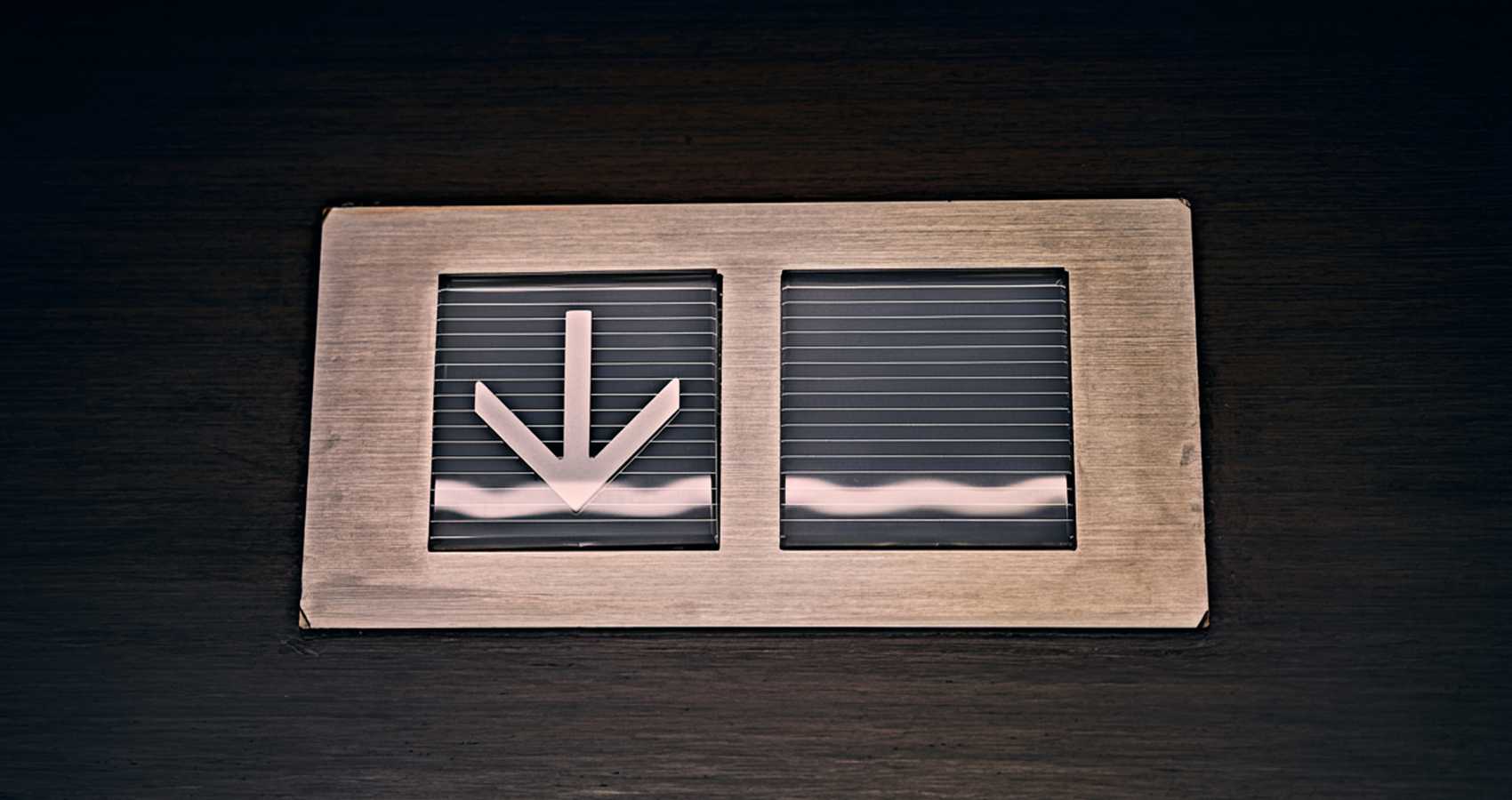
The first key element, the phrase “long way down,” refers to Will’s elevator ride during which most of the story takes place, but it also refers to Will’s impending spiral should he proceed with the task he’s set out to do—seek retaliation by killing his brother’s murderer. The phrase—“long way down”—introduces Will’s elevator ride through a poem set in bold to emphasize the idea behind the action. And the poem ends with repetition of the word DOWN in the shape of a downward arrow (70). Throughout much of this section, and by situating his poems at different places on each page, Reynolds’ formatting reminds the reader of the downward motion of the elevator car. It also suggests Will is on the long way down in his life if he follows through with murder.
The second key element is his use of the letter L. After introducing the presence of the letter L as an elevator label for the lobby button, Reynolds includes a poem, “L STOOD FOR ‘LOSER’” (75), about how Will and Shawn used to laugh when someone pushed that button because it meant they were the loser. By formatting this poem in the shape of an L, Reynolds emphasizes the meaning behind the letter and how it captures Will and Shawn’s connection as brothers. It also suggests that Will is now the loser because, on his way to commit murder, he pushed that button when he entered the elevator and began his descent into gang retaliation.
The third element is Reynolds’ inference of the word gun. Will finds a gun in Shawn’s middle drawer and takes it so he can kill his brother’s murderer. Reynolds, however, doesn’t use the word “gun” during Will’s discovery; instead he describes the weapon as “cold steel” (48) as well as through a series of nicknames—“A cannon. / A strap. / A piece” (49)—and seven other terms that indicate Will has found a gun. Reynold’s avoidance of the word “gun” adds power to this discovery, expressing that having such an item is so taboo and dangerous, even saying its name is a risk. Reynolds then takes this element further by describing the gun through images reminiscent of childhood, such as pushing “the pistol under my pillow / like a lost tooth” (60) and describing how the “clip slid from the grip / like a metal candy bar” (103). Reynolds also uses one word to describe the sound of gunfire—“Pop!” (213)—and refers to his long-lost father, who both killed someone and died from a gunshot—“MY POP / stepped in the elevator” (198). These images, created by one word but with different meanings, remind the reader Will is a fifteen-year-old boy straddling the lines between childhood, victim, and murderer.
The fourth element Reynolds utilizes is to use words sparingly. Reynolds’ poem in the opening pages reports that “Shawn was shot” (3), but he leaves that last line of the page without ending punctuation, which stirs the question of what happened to Shawn after the shooting, and giving the reader hope that he survived. The reader need only turn the page to find out; the next page answers the question—“and killed” (4)—two words surrounded by white space that carries a feeling of the void Shawn’s death has left in Will’s life; those two words are followed by a period, hinting at the finality of Shawn’s life. Reynolds also uses this minimalism at the end of the book. When Shawn first enters the elevator, he ignores Will. But when the elevator stops at L, Shawn asks Will after the other ghosts step off—“YOU COMING?”— two words, bold, all caps, and in large font. For Will, either choice—to let the murderer get away with it or to kill him—is big and bold. Ending with these two words leaves the question of what choice he will make, and with it, Reynolds communicates the range of emotions Will might be feeling and how he is torn between the living and the dead. And while all those ghosts who rode down with Will were not murderers, they are all somehow connected to those who, through their choice to play with guns, wear the label of Loser.
Works Cited:
Reynolds, Jason. Long Way Down. Simon & Schuster, 2017.

- Key Elements in ‘Long Way Down’ - September 4, 2025