

Peace
Once Taken for Granted, Now a Privilege of the Few
written by: Richard Rose
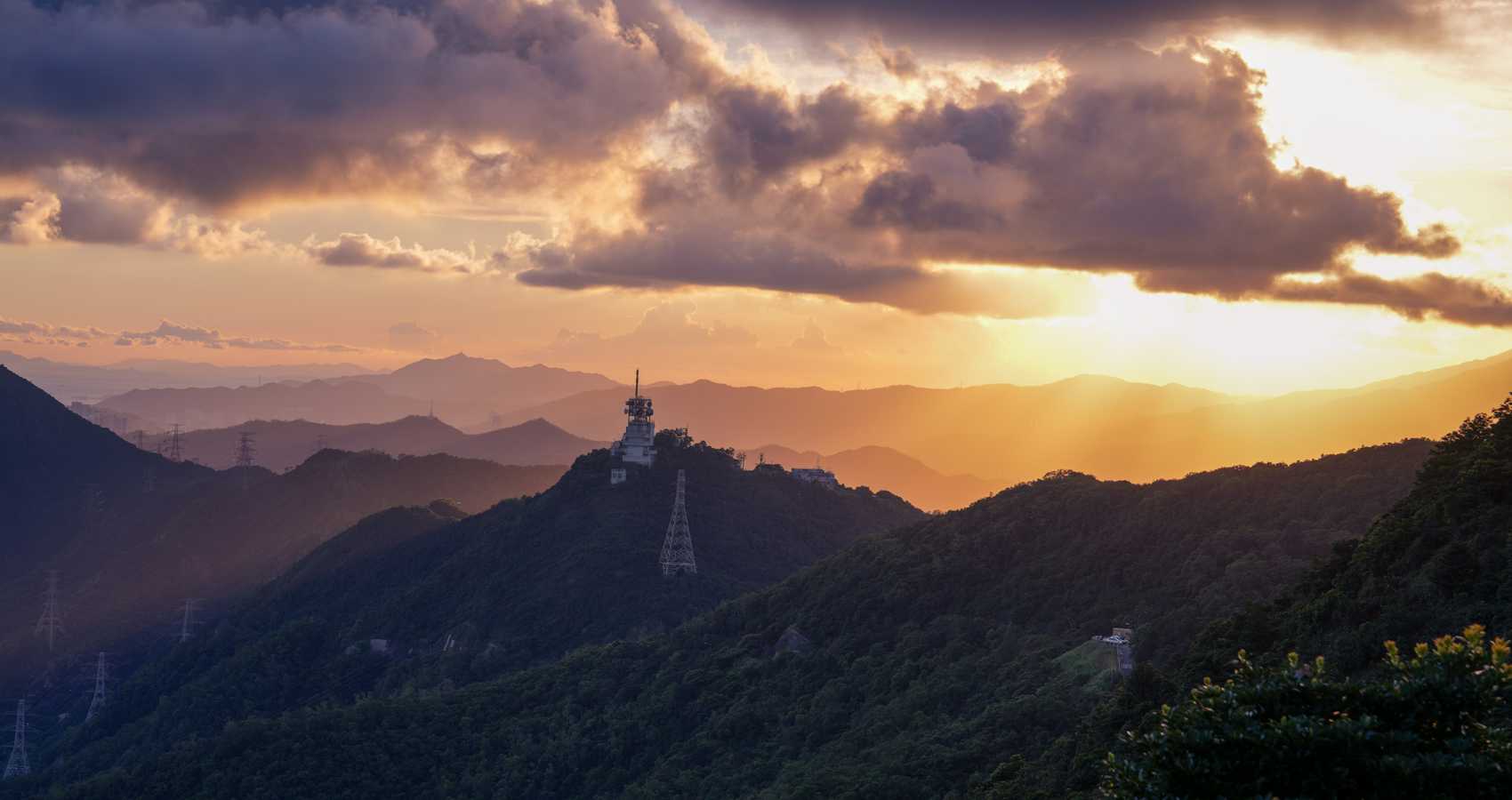
Walking on quiet hills has always provided me with opportunities for relaxation and contemplation, even when these hills are located close to the hurly-burly of a burgeoning urban environment. From the summit of Tai Mo Shan, it is possible to take in spectacular views across districts, including the New Territories, Kowloon, and the several islands that stand proud from the South China Sea. All around this long inactive volcano, the rolling lesser hills, Tai To Yan, Kau To Shan, and Kowloon Peak, often crowned with lacy clouds, may well surprise the limited understanding of Hong Kong that is often presented to the outside world. Here, the glass and steel towers, the bustling marketplaces, and the endless throng of blaring traffic, though clearly visible, can seem distant as the green and airy landscape provides welcome relief from the frantic pace of the metropolis.
In 2009, during a period working at the Hong Kong Education University, I made several excursions to the high ground that forms a barrier between what was the autonomous Cantonese region and mainland China. Making steep ascents from Tai Po along the many hiking trails that spread out across the hills, seldom meeting more than a few other walkers along the way. Here I found a welcome peace, away from my busy working schedule, able to leave behind the city and find time to reflect upon the privilege that it was to be alive in this beautiful landscape.
Peace was not necessarily a term that was readily applied to Hong Kong by those who had not experienced the tranquility of the surrounding hills. For many visitors to the region it was the dynamic, non-stop pace of a modern city that drew them in. A place of perpetual motion, lively and with a slightly different take on all the modern amenities that might be found in their European or American equivalents. Sadly, today, from the security of my home back in the UK, peace is not the first word that comes to mind when I look at the current situation in that densely populated region of Asia.
From my time working in Hong Kong, I have fond memories of the colleagues and students with whom I worked. I recall the many discussions and debates that we enjoyed in an atmosphere of mutual respect and a shared desire for learning. Always aware of the privilege that it was to work in a culture much different from my own, and to experience the food, literature, art, and music that had developed in an area that was vibrant and forward-looking, whilst still maintaining many of the long-established Cantonese traditions that provide a strong Hong Kong identity. Time spent with students keen to share their aspirations for the future, and eager to learn about how societies function in those Western societies, which they hoped to visit. Countries which had exported music, fashions, film, and ideas that interested them and which they discussed in an open, sometimes critical manner, knowing that their voices would be listened to and their opinions given due regard.
Where are they now, those dreamers who longed for increased opportunities to learn? Was I there at what might have been the final days of a golden era for this dynamic special administrative region? This is a question that I have asked myself on many occasions since those days of working with thoughtful, confident academic colleagues who enjoyed shaping their ideas and expressing these with confidence, as is customary in a university environment throughout most of the world. If I dwell too long on this question, I can easily become a little over sentimental, even some may say maudlin, over what I see happening in Hong Kong today.
I write this on the day after Jimmy Lai (Lai Chee-ying), founder of the now-defunct Apple Daily newspaper, businessman, and key player in Hong Kong’s Democracy Party, was convicted of national security offences in the Hong Kong court. Jimmy Lai is probably the highest profile of the several hundred activists, journalists, lawyers, and politicians who have been arrested or driven into exile by the Chinese Government since the handover of the special administrative region in 1997. In the early days of mainland China’s rule, the oppression that we witness today was limited, but more recently, and particularly through the 2020s, a hardline takeover of the area has become ever more apparent. At the beginning of the decade, street protests against the imposition of draconian restrictions of democracy and freedom were at their most organised. In the years leading up to this, student-led demonstrations, symbolised by the wielding of umbrellas in part as protection against the police use of pepper spray, had attracted support around the globe. Today’s protests are far more muted; fear has become the norm amongst those who would wish to see the levels of equity and democratic rights that were once the norm in Hong Kong restored.
Jimmy Lai is a British citizen, and I understand that the UK government has expressed concern and demanded that he be released from incarceration. Sadly, I believe that such a mild protest is likely to fall on deaf ears. British politicians and more especially UK commerce feel the need to maintain an association with China, and this, I suspect, will override any consideration of the rights of one Hong Kong individual. The truth is, of course, that Jimmy Lai is simply the most prominent of many such individuals who are currently imprisoned or exiled, and the countless others who feel that a tap on the shoulder may be too close for comfort. The silencing of debate is the final refuge of those who wield power but live in fear of those over whom they have authority. We see this in several parts of the world, though it is most easily recognised in Hong Kong, where in the recent past, freedom of expression was encouraged.
I have no doubt that should I tomorrow stand once again on the summit of Tai Mo Shan and look over Kowloon and the beautiful islands of Lama, Cheung Chau, and others visited fifteen years ago, I would see sights not so much different today from what they were then. I am equally sure that walking the streets that radiate from Hong Kong Harbour, I would feel far less comfortable than when I was first welcomed not so very long ago.

- Peace: Once Taken for Granted - February 23, 2026
- From Behind The Net Curtain - January 7, 2024
- Spotlight On Writers – Richard Rose - September 2, 2023