

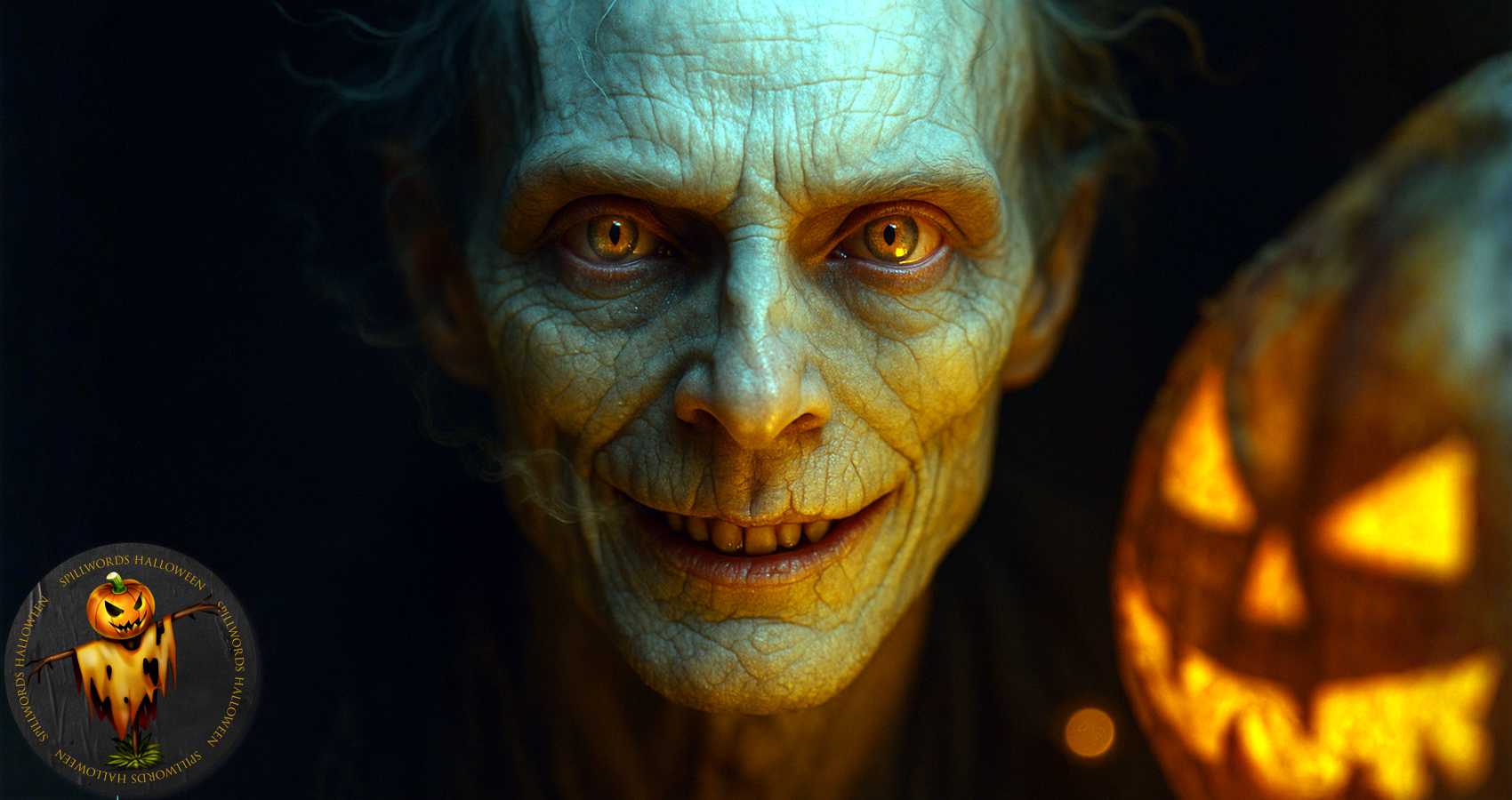
Jack of All Lanterns
written by: Jane McCarthy
In the beginning, there was Jack. Not “Jack Daniels” or “Jack the Lad” or any of those miscellaneous Jacks that litter cafe anecdotes, but Jack of the Lantern, a fellow of questionable morals who, by the alchemy of centuries, has been reduced to a grinning vegetable on suburban doorsteps.
Jack would have been astonished to learn that his eternal punishment – condemned to wander the earth with only a carved turnip for light, later upgraded, for reasons of convenience and North American pumpkin abundance, to its orange, Instagram-friendly cousin – had now transmogrified into a global lifestyle trend. “Spooky Season,” they call it these days, with hashtags, glitter, and pumpkin spice latte. What was once a tale of damnation is now an Insta feed full of mason jars, latte art, and ironic cobwebs.
Like any self-respecting folkloric relic dragged into the modern age, Jack had developed a very firm chip on his spectral shoulder. If you’ve ever known an elderly don at Oxford who remembers the days before women were allowed into High Table, you’ll know the type: forever sighing about lost gravitas while sneaking biscuits when no one is looking. Jack had not aged well.
Eternity is an unforgiving employer. These days, Jack found himself skulking around the Midwest, sulking in garden centers. There, mountains of pumpkins awaited the carving knife, each one destined to be mutilated by sticky-fingered children, then left to collapse into a mouldering heap by November 2nd.
“I used to mean something,” Jack grumbled to a particularly plump gourd. “Once upon a time, I terrified peasants into attending Mass. Now? I’m the face of seasonal produce.”
The pumpkin said nothing. They rarely do.
One evening, Jack walked into the local coffee chain, Brewtopia, a temple of excess coffee choices masquerading as new money, and was confronted by his latest humiliation: a Pumpkin Spice Latte. His very essence, the noble gourd, symbol of fire warding off spirits, was reduced to frothy syrup topped with a squirt of cream.
“This,” said Jack to the barista, “is cultural appropriation.”
The barista, who wore a red-and-green sweater and a name badge reading Freddy, blinked sympathetically. “Do you want it with oat milk?”
If Jack had actual eyes, he would have rolled them.
Jack declined and instead took to wandering the streets, watching as household after household placed his leering face, his personal brand, on their porches.
Children in polyester zombie outfits tripped over lawns, while influencers filmed TikToks about “vintage Halloween vibes.”
Jack wasn’t feeling the gourd vibes.
A lesser revenant might have taken to X to register their outrage, but Jack had never gotten the hang of hashtags. “Why is it a gate if it’s about a scandal? Who builds the gates? And why do they never lead to a pumpkin patch?” he sighed.
Unionizing the pumpkins was briefly considered as an option, but the logistics of herding gourds are complicated, and besides, he’d heard whispers that cucumbers were already in talks with courgettes for representation. They were getting too big for their boots.
At last, Jack sat down beside one of his pumpkin impersonations on the curb. It glared at him, its crooked smile lit by a tea light powered by a battery. Not even fire anymore, just a tiny LED from the seasonal aisle of the local We-Sell-Everything.
“Ah, well,” Jack sighed. “Better to be a watered-down meme than forgotten entirely.”
It was, he reflected, the lot of many old gods and bogeymen. They once wielded iron scepters and brimstone damnations; now they were emojis, collectible vinyl figures, and limited-edition fast food tokens.
He patted the pumpkin and plodded into the gloom, grumbling about loss of authenticity. But if you looked hard enough, through the suburban haze of porch lights and bite-sized treats, you could spot the glint of his lantern burning just a little bit more brightly.
A man, or myth, must find his relevance and attention where he can.
The next day, Jack decided to reinvent himself, as an Influencer. Yes, capital “I.”
It had occurred to him, somewhere between despair and indigestion, that all modern relevance resided in light that is ring-shaped, hashtags, and an inhuman tolerance for self-promotion.
Jack’s first obstacle was, of course, equipment.
You can’t be an Influencer with a festering turnip and the perpetual smell of brimstone. So he strode into one of those enormous shops where you can buy a pumpkin, a frying pan, and a sweater, all in the same section.
Swiping a credit card stolen from an unlucky Irish merchant (miraculously still accepted by the credit card company, who, like Hell, never forget), he emerged with:
One ring light in “Millennial Pink.”
A tripod sturdy enough to support even his colossal pumpkin head.
A selection of “fall-aesthetic” cardigans that made him look like a divorce lawyer attending a book club.
His handle, naturally, was @EternalGlowOfficial, though he toyed briefly with @TurnUpForTurnips.
Jack uploaded his first video that afternoon: “How To Carve Your Best Self This Halloween (spiritual tips from a damned soul).”
The algorithm, alas, did not reward him. His painstaking monologue on the symbolic link between Samhain and the Celtic underworld garnered precisely six views, four of which were bots attempting to sell him cryptocurrency.
But Jack was not easily dissuaded. For centuries, he had trudged the Earth in darkness, surely, he could trudge TikTok for a fortnight. He diversified: “Pumpkin Carving Hacks You Won’t Believe #LifeHack,” “Ghosting, But Literally (Dating Advice from the Afterlife),” and his pièce de résistance, “Rating Your Porch Decor: From ‘Damnation Chic’ to ‘Basic Witch.’”
Slowly, agonizingly, like toffee trickling over an apple, the numbers grew. First, a dozen followers, then two hundred. By the end of October, he had a modest but devoted audience, most of them university students majoring in Folklore or people with an odd fetish for gourds.
He felt proud. Almost. Yet every time he leaned into his ring light, he couldn’t help noticing the faint flicker of mockery in the LED’s reflection. Was he truly reclaiming his narrative, or was he merely another relic commodified by the beastly hydra called Content?
Jack considered quitting. But then came the sponsorship offer. From, of all places, Brewtopia.
“Would you,” the email fawned, “be interested in partnering with us for our Pumpkin Spice Legacy campaign? We believe your brand aligns with our seasonal authenticity.”
Jack howled. He raged. He composed a five-thousand-word essay titled “The Death of Symbolism and the Rise of Syrup.” But in the end… oh, you know what he did. He signed. He posed for photos with a steaming latte, plastered on a grin wider than any carved pumpkin, and whispered through clenched, pointed teeth: “Better a sponsored ghoul than a forgotten ghost.”
And so, Jack of the Lantern became Jack of the Algorithm, his soul still damned, but his feed surprisingly vibrant.
For a brief, flickering fortnight, he was trending. His carved grin appeared in TikTok compilations alongside dancing cats and an alarming number of teens lip-syncing sea shanties. Brewtopia showered him with Pumpkin Spice paraphernalia, and he was even invited onto a podcast hosted by two earnest men called Gary and Maximillion, who described themselves as “paranormal entrepreneurs.”
But as every Influencer learns, usually between the third brand deal and the first leaked DM, the higher you rise, the thinner the ice beneath your Gucci loafers. Jack’s downfall arrived with a hashtag:
#LanternGate.
The controversy began innocuously. Jack, in a moment of weary candor during a livestream, let slip that he had always preferred turnips to pumpkins. “Sturdier flesh, superior light diffusion,” he said, entirely truthfully.
The internet, that great machine of instant outrage, heard only betrayal. Memes flooded in: Jack’s face crudely Photoshopped onto a radish, Jack accused of being “Anti-Gourd.”
The follower count plummeted faster than you can say “algorithmic shadow-ban.”
He tried to apologize, of course. “Some of my best friends are pumpkins,” he declared in a screenshot posted to Insta. But it was too late.
The mob was baying for blood on the streets.
Someone unearthed a centuries-old pamphlet describing his trickster days in Ireland, spinning it into a headline: “Problematic Origins: Influencer Has Literally Been Damned Since The Middle Ages.”
Brands bolted.
Brewtopia dropped him with the ruthlessness of a guillotine, replacing him with a smug scarecrow who described himself as “neurodivergent, gluten-free, and available for speaking engagements.”
Even Jack’s cardigan sponsorship was rescinded.
Once again, Jack found himself alone, not on a cobbled medieval road this time, but in an Airbnb.
He scrolled through the comments on his last post, where a user with a scary icon had written: “Ok boomer (literally).” It was the last straw.
For a moment, despair threatened. Yet as he sat there, Jack felt a surge of relief. Perhaps irrelevance was a kind of freedom. Perhaps the true horror was not in wandering the earth with a cursed lantern, but in refreshing one’s analytics dashboard at one in the morning.
With a grunt, he shut the laptop.
Blowing on his old flame, a real one, no battery required, he watched the glow rise warm and honest against the dark.
“Back to the road, then. Hell is hot, but at least it isn’t moderated.”
And with that, Jack the Damned shuffled into the night, oddly comforted, leaving behind both the algorithm and the pumpkin spice, his legend slightly bruised but, thanks to the internet’s attention span, never truly gone.
Thus did Jack of the Lantern, lawbreaker, scamp, turnip-carver, latte-model, retired Influencer with a capital I, return to legend. Rising up with the subdued dignity of one who has tried, failed, and tried again, and who had at last discovered that obscurity can be an astonishingly bountiful fate. His was a tale of hollowed-out pumpkins, lost fans, and pride held on by the tenuous strands of ectoplasmic fingernails. But in the vast, indifferent stretch of human memory, his small flame persisted, a soft assertion that our stories can cast light into the darkness.

- The Inner Editor Speaks, But Not Quite - January 31, 2026
- Jack of All Lanterns - October 30, 2025
- What Happens In The Dark - September 20, 2025