

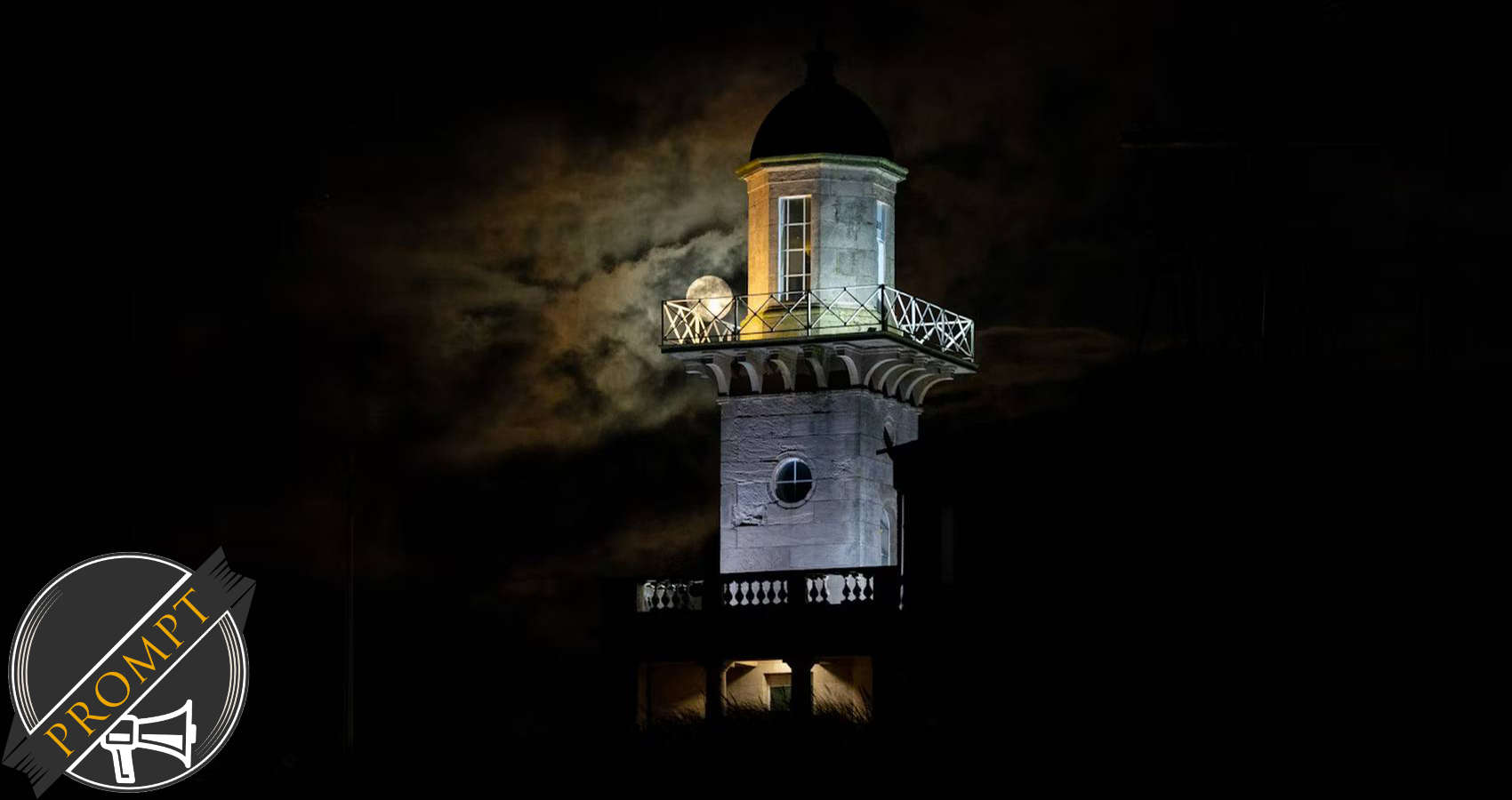
The Light Behind a Lighthouse
written by: Patricia Furstenberg
Once, on the raw-ribbed coast where the sea gnaws the cliffs and the wind sings in the bones of ships, there lived not a maiden in a tower, but a girl who lit towers for others.
Her name was Grace. Not because she was soft, nor docile, but because her birth fell on a quiet November day when even the gulls were still, as if the wind itself and the wolves too, paused to listen.
Grace of the North Sea, sixth daughter of a lighthouse keeper (of just as many children), was raised not among silks and whispers, but among salty salt and frozen storms. The castle of her childhood was a squat stone lighthouse upon the Islands, a place battered by tides and, most of the time, cut off from the mainland where the sky married the sea in a perpetual quarrel.
Her father loved the Gospel and the grinding of gears, and passed on both, faith and knowledge, to Grace. Her mother taught her to keep a hearth warm and a home dry, even when rain dripped from the beams and the wind spoke in shrieks.
She was no swan-armed princess, but a girl with rough hands and steady wrists. She knew the rhythm of the tide better than any waltz. She could read the stars faster than a courtier reads a lie. And though no one penned ballads for girls with oil-smudged cheeks, Grace learned early that it is light that matters most in darkness.
In a fairy-tale, she would have waited. She would have dreamed of princes. Of a suitor rowing across the foam to save her from solitude. From hardship. From grit.
But Grace had no taste for lords, nor for the weakness they wore like silks.
And so it was Grace who answered the call of the storm that day.
On the seventh day of September, in the Year of Our Lord 1838, the Farer’s ship split upon the rocks like an egg dashed against stone. The sea, that cruel and hungry thing, clawed at the wreck, dragging men into its gullet. Hungry beast without mercy.
From her window, Grace saw the fragments. And the figures. Nine souls clung to life upon a jagged outcrop. Her father stirred beside her, but before he could speak Grace was tying her cloak, her mouth set like a promise.
“No one will come,” she said. “So we must.”
The waves roared like beasts in pain. The wind battered their wooden boat, dwarfing it like an insulted god.
But Grace rowed. And rowed.
Her arms burned. Her skirts clung wet to her ankles. Salt kissed her eyes. Scraped her lips.
She rowed on.
She did not call for saints. She did not wait for rescue. She became the rescuer.
And when they reached the wreck, she held the boat steady as her father pulled the broken, the half-drowned, the shivering aboard. One man wept into her sleeve. Another kissed her hand as if she were queen.
But she had no crown. Only the ache of limbs and the taste of iron on her tongue.
They sang of her afterward, of course. Ballads in parlors. Her face carved in ivory. Her likeness on teacups and broadsheets. They called her England’s Rose, Heroine of the North. And worse, not understanding her call: Angel of Mercy.
But angels do not blister their palms on oars.
They said it was unmatched bravery. Grace said nothing. She knew courage was not a gift, but a decision. Not a flash of light but a slow-burning lamp, trimmed and kept on, night after night.
And so she returned to the rocks. To her lighthouse. To her silence.
In every fairy-tale, the heroine is transformed. But Grace did not change. It was the world that shifted, realizing—too late—that true nobility lives not in castles, but in women who light the way.
Not every girl dreams of being rescued.
Some row straight into the storm.
And that, too, is a kind of magic.
A fairy-tale reversed.
NOTE:
Based on the Prompt – Reverse Fairytale

- A Bead of Ice - December 5, 2025
- The Light Behind a Lighthouse - July 29, 2025
- The Shape of Fear, the Shape of Love - June 24, 2025