


The War Within The Battle
written by: Ahmed
The sky hasn’t fallen yet, but I keep staring at it as if my gaze could will it to crumble. I sit on the balcony like a ghost who forgot he once lived, watching the world spiral into its choreographed chaos, an opera of blood and pride, staged by giants for an audience too small to matter and too tired to scream. The air tastes like the prelude to fire, like something ancient in the bones of the earth is stretching, waking up not to save us, but to witness the climax of our ruin. And here I am, stateless, faithless, free in the most tragic sense, like driftwood that mistakes the waves for purpose.
The war, if we can even call it that anymore, is a play with too many masks: is it a divine drama or just another smoke-trick from the hands of those in power? I don’t know. But I’ve stopped asking. I’m not rooting for the righteous, for who knows what that is anymore; I’m just rooting for the underdog, not because he’s any better, but because he’s lost. And something in me has always sided with the condemned, not to rescue them, but to justify them. I do not want peace, not now. I want to see the oppressors defeated, even if the world has to collapse for them to be toppled.
It’s David and Goliath, yes – but this time David lacks a God, a sling, a prophecy on his side. Just the absurd valour of being small and angry in a world that only listens for the sound of boots. And as I look up, I half-wish the sky would ignite, not in anger, but hunger, for something so final that even the silence afterward would be like justice.
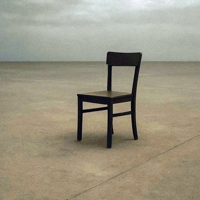
My heart is not afraid of death, but the cries of the ones left behind, the vacant chairs, and the toothbrushes still in glasses after the breath is gone. But my nihilism, that old friend who sits with me like a shadow with a grin, tells me to whisper that none of it matters. That if the world needs to die, then let it be a grand finale, a burning curtain call. Let the mighty kill the meek and let the meek, as they draw their final breath, spit on the boots that trod them out.
I want to see it -not because of cruelty- but because of boredom, because of the emptiness that routine engenders in the heart. Let something happen. Let something enormous fracture. Let the drama rise to its conclusion, and let the ashes be meaningful at least if the lives were not.
The worst tragedies are not the ones that we don’t see coming, but the ones that we see in excruciating detail and are powerless to stop. I sit here, knowing how it will all end, not with a whisper of revolution or the soft echo of a just cause triumphant, but with silence ground beneath the feet of giants. The mighty will triumph—not because they are right, but because they can. They always have. And if the underdog presume to rise, if some foolish spark within his chest in form him this is his hour, the world will burn—not as sacrifice but as punishment. The mighty never go down alone; they set the world ablaze as they plummet, just to make certain history doesn’t find them on their knees.
This is no novel. No poetic justice resides here. No deus ex machina to turn back the tide of things. This is the world of realpolitik and missiles, of backroom deals and immovable arrogance. And the most tragic line in this script may not be the fall of the weak, but the expectation—the maddening expectation—that they ever had a chance. I find myself wondering if this resistance is voluntary or obligatory. Does a man rebel against a giant because he believes, or because he has no choice? What innocence—what awful spark of human volition—convinces flesh and blood to battle fire and steel?
There was a time when wars were fought among equals, and errors brought down empires. Now there is only one master, and his mistakes are absorbed by the fabric of the universe, rebranded as fate. He has found: no competition, no threat. Only terror. And obedience. The game is his, and we are merely the pixels on the screen.
And still—still—I watch. I watch as a man might watch his own funeral, detached and curious, amused at the dance of death. My mind says this is slaughter with a script, and yet I watch, entertained, horrified, enthralled—because I’m cursed to a consciousness that will not permit me to look away.
They say the mob is ruled by fear—but I am not fearless by virtue. I am fearless by futility. I am not in fear of anything because nothing makes sense any longer. I don’t stand outside the system proudly; I am out here because I am flawed. I wish I could believe. I wish I could be a cog. Oh, how I want to be that well-oiled gear, rewarded for conformity, soothed by routine. Let my pleasures be in meals served and beds made, in warm hands and gentle distractions. Let me live like a human should—blind and content.
But no. I’ve traded my reward system for awareness, and now I’m left half-living—knowing too much to be happy and too little to be free. My consciousness has become my chains, and in trying to wake up, I’ve paralyzed the part of me that could ever rest.
Today, when I stepped out of the dead shell I call work—a non-creative exile where time passes only to decay—I came into the light of a sky too quiet to be reliable. My ears were met with music that failed to move me, words written by others for people who feel in ways I’ve lost. The walk was short—five minutes, an easy punctuation between the sentence of my day and the ellipsis of my solitude—but I prolonged each step like a man trying to delay his return to the grave.
The sky loomed above with such tranquility that it felt like a setup. So I imagined it ablaze. I closed my eyes mid-step and painted panic on the street. Shrieking humans, grabbing for their kids, lovers embracing as the heavens collapsed in. I imagined the tar melting under our feet, the glass splintering like sudden applause from unseen hands. And in that theatre of endings, I asked myself: where would I run? Into whose arms would I fall? Who would call my name above the sirens?
No one. I would go to the sea. Not for escape. Not for drama. To sit and watch the end like I’ve watched my life—detached, curious, uninvited but present. I envisioned mushroom clouds blossoming like obscene flowers, the water raging not with life but fury. And I was serene. Not because I’m looking for death—I’m not. If I were, I would’ve embraced it by now. No, I was serene because nothing would catch me off guard. The end feels like old news. Like a rerun.
This life—this period of sitcoms and artificial grins—has bored me into defiance. Predictability has alienated me. When everyone laughs on cue, cries on cue, prays on cue—I prefer to keep my silence, not in revolt but in nature. I was not built to go by the script. I don’t play roles. I do not seek difference as ornament—I am different because I do not submit to the entropy which governs them. I walk beside life, not beneath it. I speak to it not as a dutiful son or a cringing slave, but as an equal in this meaningless comedy.
It’s not pride. It’s design. I am not better—I’m just different. And so if the world ends, let it find me not hiding, not loving, not fighting. Let it find me looking—with my head held high and my hands bare—because that’s how I’ve always met every moment that tried to make me feel inferior.
These are perhaps nothing but an escape hatch carved into the yielding walls of my mind, a door that opens not into liberty, but into fantasy. Nothing will happen—likely, nothing ever does. The sky will continue blue and bare, the buildings won’t topple, and the people around me will remain moored to their coffee cups, their tired smiles, their scripted existence. And I will be trapped—in this barren cycle of days, this job that builds for others what I could never have, in this quiet desperation to be part of a world I was never shaped to fit.
And maybe that’s worse than war. Maybe a life unrealized, unloved, and unnoticed is more vicious than any bomb. Maybe it’s selfish to think so. Maybe it’s monstrous to opt for the cleansing flames of catastrophe instead of the slow rot of routine. But is it a sin to be selfish in thought? Isn’t the mind the only place we’re allowed to scream without hurting anyone? Isn’t it my right to fantasize about oblivion, as long as I’m gentle in action? Provided that I keep smiling at strangers and answering emails and designing villas I’ll never visit as a guest?
I am an architect. Not of beauty, but of emptiness. I create spaces for the rich, monuments to lives I will never live. And if by some cosmic error I were to possess their wealth, I would not spend one coin on the empty structures I build. They are beautiful in form but dead in spirit—like me. I do not create homes. I create trophies. I create prisons with gold handles.
And yet, I am guilty. Guilty for thinking of myself. Guilty for assuming to envision a finale that would spare me from tomorrow. Guilty for imagining comfort in Armageddon when others would lose everything. What a sadistic mind—to deny me even the solace of my own delusion. Even in the final scene of my own fiction, I may not have peace. I imagine the end and yet my heart aches—my parents, not because they would die, but because they would fear for me. I imagine my sister, my brother, their frantic hands reaching for mine before the light goes out.
Even in death, I have no peace. Even in dreams, where nothing lasts, I carry the burden of survival. Perhaps this is the worst tragedy—not that we suffer, but that we are not even allowed to suffer selfishly. That our very bones are culpable of having been molded by solitude. That even in silence, we are accused by the echo.
And here I am again—like last night, and the night before—getting into bed not to sleep, but to become oblivious. I leave my alarm like a spell to summon the ghosts of responsibility, knowing full well that sleep is my only sanctuary, the one in which reality loses its shape, my name its weight, and the world’s script its hold on me. I do not sleep—I vanish.
There’s a dawn on the other side of the darkness, another stride into duty in the guise of purpose. I will wake and not with hope, but with muscle memory. I will brush my teeth, and the mint will burn not just my tongue but my soul—a sharp, clean announcement that I’ve reentered the battle. A battle in which no bullets are shot, but where every second wounds me in invisible ways. They call it a job. I call it a slow death with a lunch break.
I wish I had the greed to justify it all—the hunger for bills, for bonuses, for the facade of success. I wish the numbers in my account had heated up my chest, or that a future lined with possessions gave meaning to this repetition. But I don’t work for a living—I work to survive my own mind. I exist only to make it back to the pillow again, to tick off the hours until I can shut my eyes and vanish.
And tomorrow, the same as today, I’ll walk among the living in a dream of the end. Not because I crave destruction, but because only in destruction does everything finally stop. Only then can I breathe without expectation, exist without performance. The fantasies recur—not out of malice, but out of fatigue. The world ends in my head, not because I hate it, but because it’s the only way to silence it.
I’m not lazy. I’m just exhausted. Exhausted in a way that no rest cures. Exhausted in a way that speaks in sighs and thinks in goodbyes. Everyone tells me life is a gift, but I keep getting it without asking, and I don’t know anymore how to be grateful for something I never wanted to unwrap
And just as I began to relax into the silence of my own collapse, fate—always with its twisted sense of humour—reached out of the darkness and rang my phone. My chief engineer, a man whose only real contact with me has been the ritual “Good morning,” passed like a note between strangers, was calling me now, his voice strained with fear, fractured by a language not his own, and requesting that I translate the end of the world.
He didn’t speak the language, wasn’t up on the news, only heard rumors, and watched the skies grow dark. Why, he asked, was the airspace closed? Why were war rumors blown on the winds? And I stood there, an unwilling prophet in pajamas, telling him Don’t worry, brushing his questions away like dust from the cluttered desk of my mind, trying to be calm while the irony shrieked in my brain.
What timing, fate. What ironic precision. The man who barely raises his gaze from his desk, who probably never knew I was intelligible outside office pleasantries, somehow had my number—and somehow thought I was the one who could bring peace in the face of destruction.
Me. Of all people. Me, who just moments earlier was imagining the sea devouring the sky. Me, with no strings binding me to the earth—not to family within reach, not to love, not even to the shadow of self-preservation. I, who fantasize about the fall not as catastrophe but as liberation, now became the voice of reason for a man who clung to his wife and children, the string of his world wrapped around their hearts.
And so I spoke. I told him it was nothing, that the news always exaggerates, that it’s not the first time, and won’t be the last. I kept him on the line until his breathing slowed, until he could lie down beside those he loves. And after he hung up, I sat in the darkness smiling—not with happiness, not with resentment, but at the absurdity of it all. The stage of life had inadvertently cast me as the consoler in a tragedy I myself could not bear.
For isn’t that life? A man with no ground beneath his feet inquired of me where to find firm ground. And I answered, not because I knew, but because it seemed someone had to. In the sitcom that I hate, I became the joke. The punchline. Not because I’m funny, but because the universe is.
Not one call—but two. As though tonight, the only bombs falling were voices seeking shelter in mine. The first from the other end of my world, a man who doesn’t share my language, asking me to translate the silence of bombs and bureaucracy. But the second—oh, the second—was from someone much closer, not in years or in friendship, but in despair.
He called at 11:20 PM, the hour when the soul begins to rot quietly beneath the skin, the hour when loneliness is at its full peak and knocks on whatever door is still open. His voice was soaked in rum—not his usual whiskey—and he noted he bought the bottle simply because I once said I liked the taste. We’ve known each other for 45 days. Drank a few times. Traded silences more than tales. Yet, he phoned. Not to talk, but to disintegrate softly in my ear.
I did not wish to answer. I wished to hang up. But something in the manner his voice cracked—a bit, as with an old door not shrieking—caused me to stay. I listened, the weight, the invisible rock upon his chest. So I said to him the things I don’t say to myself but sounded to him like gospel: that he’s good, that he’s enough, that he’s human. I did not lie—but I spoke with a gentleness I never give myself.
The call lasted for 28 minutes. A personal record for a man whose phone calls usually get finished before they’ve begun. I stayed because I’m not altruistic, but because I recognized the thud of a person falling, and for once I wasn’t the one falling. I said everything I ever wished I’d heard. Everything I still wish someone would say to me, to this day, just once. Maybe I wasn’t speaking to him. Maybe I was speaking through him.
And so destiny, in its dark humor, its sadistic brilliance, tonight had me act out both sides of the mirror. One man calling from the other side of the chasm, looking for reassurance for the things he cannot see. Another man, from my side of the abyss, looking for reassurance for the things he cannot feel. And I, the hollow thing in the middle, had to be strong. Had to be solace. Had to be the answer.
But I am not comfortable. I am ash. Ash in the shape of a man. I am the brittle form of strength, breaking if you so much as breathe. And yet tonight I stood tall—not because I am strong, but because I know the dance of collapse, and I did the opposite out of duty. Fate, in its infinite irony, mistook me for a fortress. Yet I am a ruin pretending to be useful one more time.
And sure enough, I woke up not to fire but to farce. The world, ever the master dramatist, declared peace yet again—a further truce between two actors who deserve prizes, not for justice, but for acting. One plays the tragic hero, eyes wet with purpose, and the other embodies arrogance, robed in divinity, inviolable. The theatre is bombastic, the script well-rehearsed, the applause predetermined. And I? I am neither player nor spectator. I am the janitor of this playhouse, sweeping up the ash as they prepare the stage for the next act.
My battle is not fought on maps. My combat zone is the desk, the screen, the tightening spine that rebels with every faked smile and forced word. I don’t have faith in the job, but I have faith in what I will become if I lose it. Not poverty. Not failure. Something worse. The collapse of the structure, the cutting of all the threads, hardly held me upright. I get up not for a purpose, but for survival.
A ten-hour workday awaits. Ten hours of being something I’m not, for the chance at not being discarded. I pretend to be passionate about lifeless projects so my roots appear too deep to tear out. I act with enthusiasm like an actor acting on the edge of a rooftop, hoping they won’t notice he’s terrified of heights. Because if I fall—if I leave this job—I know myself too well. I will not seek another. I will not rise. I will melt into the mattress like a bad poem. I will rot—silently, gently, without revolt, but only surrender.
This peace they speak of is a trick of the tongue. War continues in smaller ways. In deadlines. In back pain. In the antiseptic violence of routines. And I—I am no soldier, but I have wounds nonetheless
The hardest survival is not catastrophe, but the moment that follows, when nothing happens, and you must still keep going. I brewed coffee this morning, answered work emails, and smiled. No one knew I was grieving the death of something I couldn’t identify. No one sent flowers. No one asked me what died.
I dragged myself to work and pulled the day behind me like a dead animal, one task at a time. I finished what was left undone. I even looked ahead—fifteen days into a future I have no faith in. Not from any belief, but because it would arouse suspicion not to. I kept my hands busy so my mind wouldn’t. I substituted physical fatigue for mental fatigue, like a man who scorches his legs only to disregard the scorching in his chest.
That’s the silent irony of a working body and a thinking mind—there’s no rest. You burn at both ends. The mind won’t stop thinking, the body won’t stop following. And I come home not for rest but for collapse, both wires burned, both engines drained.
And still, I push. Not from hope. Not even from ambition. I push because forward is the only way the world goes. I move like something might change, like inertia might summon a miracle. Not that I suppose I believe in miracles. I don’t. I believe in the mess of life, how it rearranges itself when it gets bored. Something will break. Something will burn. Something will finally feel new. Until then, I’m here: dressed for work, pretending to be stable, dragging my funeral suit across the calendar like it still means something.
- The War Within The Battle - December 28, 2025