

A Storyteller’s Mission
Promoting Literacy and Nurturing Young Minds in the Philippines
written by: April Mae M. Berza
In a quiet neighborhood tucked between the noise of jeepneys and the rhythm of daily survival, a small but profound revolution was taking place—one led not by politicians or global philanthropists, but by a freelance writer, editor, and translator with a simple dream: to help children fall in love with learning.
For many children in the Philippines, access to quality education remains a privilege rather than a right. According to UNICEF, as many as 2.7 million school-age children were out of school in recent years, due to poverty, displacement, or lack of access to safe and inclusive learning environments. The disparity is even more acute in rural and underserved urban communities, where libraries are scarce, and textbooks are often outdated or shared among dozens of students.
But books have a way of sneaking through cracks, of finding their way into the hands of those hungry for stories. This is exactly what happened when one woman—armed not with institutional power but with empathy, vision, and a love for words—decided to become a bridge between stories and the children who needed them.
The Spark: A Dream Born from Books
It began quietly. The woman, a long-time freelancer juggling translation projects and writing gigs, had always been moved by the potential of words to open minds. But something shifted when she read “Abundance” and “Bold” by Peter Diamandis and Steven Kotler. These books painted a vision of a world where technology, compassion, and creativity could lift entire communities. They asked readers to think bigger, to lead boldly, and to create impact—no matter how small the beginnings.
With those ideas planted like seeds in her heart, she looked around her neighborhood—noticing children loitering after school, some without access to gadgets or books, others burdened by responsibilities too heavy for their age. She remembered her own struggles navigating education, working summer jobs to help her family, and how books had once offered her a lifeline—guiding her toward a different path.
A Library of Laughter and Learning
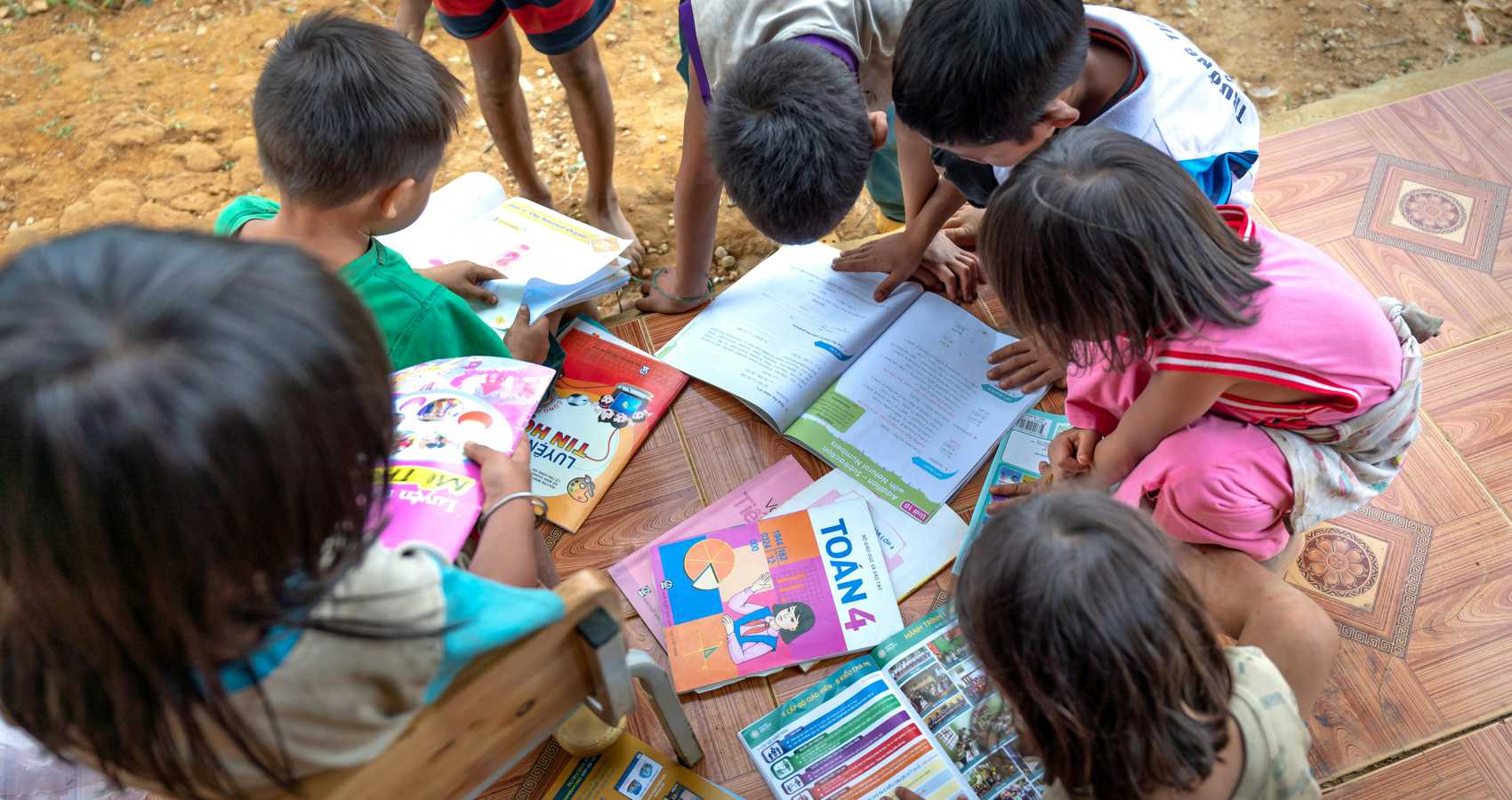
Before the pandemic swept across the world, she started gathering children in the afternoons, beneath the shade of trees or in front of small apartments turned temporary reading nook. These weren’t formal classes—there were no uniforms, no desks, no tests. Just storytelling sessions, often accompanied by wide-eyed listeners who came back day after day.
She read them fables and folk tales, stories of distant lands and talking animals, of underdogs who triumphed, of dreams that defied gravity. The kids, some of whom hadn’t held books in their own homes before, slowly began to ask for more. Their eyes lit up with each plot twist, their questions grew deeper, their imaginations bolder.
But she knew that literacy wasn’t just about reading books—it was about building confidence, giving voice to children who often felt invisible. So she added basic writing lessons, taught them to count, encouraged poetry, songs, and even impromptu acting games. When a child sang a folk song their grandmother had taught them, everyone clapped. When another wrote their first poem, she praised it like a published masterpiece. These were more than lessons—they were moments of empowerment.
The Ripple Effect of Curiosity
What started as a passion project soon became a habit of the heart. The children began bringing their younger siblings, cousins, and even their parents. Reading wasn’t a chore—it became a shared ritual, something they looked forward to, even during rainy days or brownouts. It was their form of escape, yes, but also their anchor.
She partnered with local libraries and community organizations, scavenged for secondhand books, translated Filipino stories into English and vice versa, and used her freelancing income to buy school supplies or snacks for her young learners. The more she invested time, the more she realized that learning is most effective when it feels like play, when it’s grounded in relationship, rhythm, and respect.
And when the pandemic hit, and the in-person gatherings had to pause, she adapted. She wrote personalized learning guides, sent voice notes, and worked with parents to continue lessons at home. Education, she believed, didn’t stop at the classroom door—it lived in the spaces where love and effort met.
Why This Matters
This story isn’t about grand gestures. It’s about the power of consistent, compassionate action. In a country where thousands of children fall through the cracks of the education system, grassroots efforts like these are lifelines. The World Bank has warned of a global “learning crisis,” and the Philippines is not immune. But stories like this one remind us that solutions often begin in our own backyards.
When a child learns to read, they are not just decoding symbols—they are learning to imagine. When they are encouraged to express themselves, they are learning to believe. And when someone listens to them, they learn that they matter.
The Power of One, the Hope of Many
What this freelance writer, editor, and translator proves is that you don’t need to be an NGO, a celebrity, or a policymaker to make a difference. Sometimes, all it takes is a book, a voice, and the willingness to show up. In her case, she brought stories—and with them, she planted seeds of curiosity, courage, and connection.
The children she mentors may not remember every character or lesson, but they will remember how she made them feel: seen, capable, and cared for.
And maybe, one day, some of them will become storytellers too.
- A Storyteller’s Mission - January 19, 2026
- The Goddess of Books and the Singer-Songwriter - April 21, 2024
- The Death of Percy Lapid - January 13, 2023