

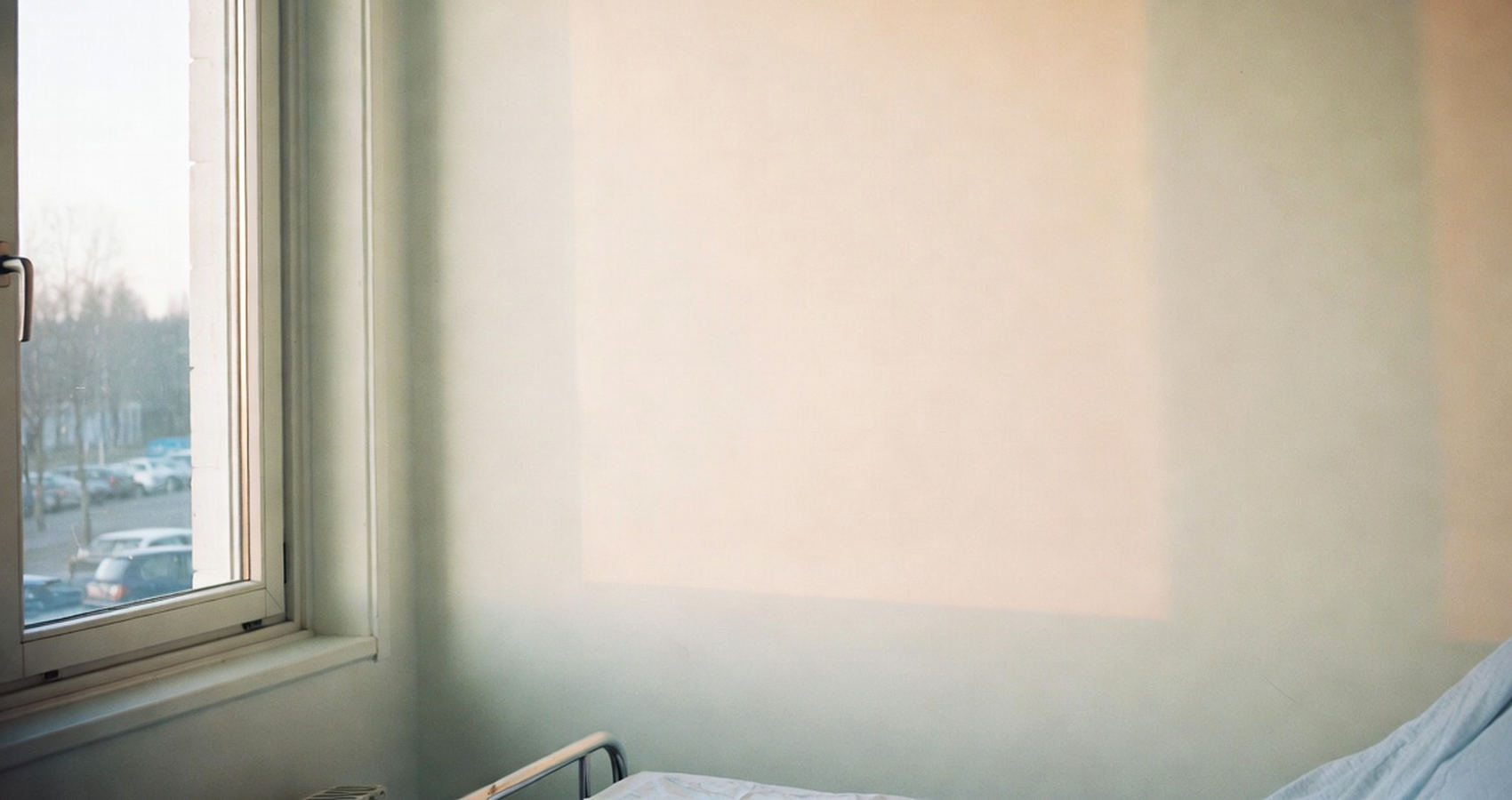
Shuttered
written by: Lynn Newman
Night shift has its own rhythm.
By eleven, the ward had settled into the soft machinery of after-hours care. The corridors dimmed to permanent twilight. Monitors hummed like distant insects, and the wheels of the trolley learned to whisper. After enough years, the nurse had come to recognise the small patterns that meant someone was nearing their end. It wasn’t written in the notes. It happened at the windows and doors.
People closed things. Both families and nurses complicit. Blinds first. Then curtains. The world outside reduced to a narrow strip of darkness at the edges of the glass. Voices dropped. Lights dimmed. She understood the instinct. Maybe with everything shuttered, death might pass them by.
She had done it herself more times than she could count. Quietly. Efficiently. With the calm hands of someone who knew the routine. Close the room. Contain the moment. Protect the family from the ordinary world continuing outside the glass.
Room twelve was like that. Earlier, the daughter had stood beside her, fingers tight on the cord, watching as the blinds closed in slow, deliberate movements until the outside world disappeared. When it was done, the woman nodded once, as if something necessary had been secured.
Later, near midnight, a new patient was admitted to room seven.
The woman was small, alert, watching everything with bright, measuring eyes. The nurse reached to tilt the blinds closed, beginning the familiar pattern. The patient lifted a thin hand.
“Leave it,” she said.
The nurse paused. “The light might bother you.”
“It won’t.” She breathed carefully between the words. “And the window open. I want the light and the night. I want all of it.”
The nurse hesitated for half a second longer than usual.
As she turned to leave, the nurse noticed the orange glow from the streetlight, warming the stark hospital blanket. The patient’s gaze had softened, her focus somewhere beyond the room.
The woman was elsewhere now. Her mind wandering back to her youth. Dancing into the night, laughter spilling into warm air, giddy with freedom. The soft orange streetlights guiding her home in the early morning. Exhausted. Exuberant. Life full of possibilities.
Later, when the nurse returned to adjust the drip line that did not need adjusting, a car turned into the street outside, its headlights sliding across the ceiling like slow water.
The patient’s eyes followed the movement.
“I learnt to drive in a manual car,” she said. Her voice thin but steady. “A dark blue one. Back of my legs stuck to the bright white vinyl bench seat in summer.”
The nurse smiled unexpectedly at the memory. She could almost see it. Smell it. The trapped heat of the car. Windows down. Elbow out. Possibilities stretching forward down an empty road.
“He’d take me out after dinner when the roads were quiet,” the patient continued. “He said other cars made me nervous.”
A pause.
“I wasn’t nervous,” she added softly. “Just excited.”
Another car passed. Another brief wash of light.
The patient’s mouth lifted slightly at one corner, as if the memory had weight and she was holding it carefully.
“We learnt a lot of things in that car.” Her eyes twinkled faintly. “It’s funny what you remember. Not the big things. Just… the headlights on the ceiling.”
The nurse glanced up. The ceiling was blank now. Still. Silence settled again. The ordinary hum of the room returned. Oxygen. Monitor. Distant footsteps in the corridor. A muffled cry.
Outside, another car approached.
By three in the morning, the nurse realised she was checking room seven first. There was no clinical reason for it. The observations were stable. The chart unremarkable. Still, each time she passed the doorway, her eyes slid sideways, just to see.
On her next round, the nurse noticed a soft blue light pulsing through the window. An ambulance, lights flashing in the distance. No siren on the empty streets.
The patient noticed it too.
“That light,” she whispered. “Same as the night my first child was born.”
Her fingers shifted slightly against the sheet.
“Unexpected complications,” she murmured. “Fear and joy all tangled together.”
The blue pulse faded slowly from the room.
In room twelve, the blinds were still pulled tight. The occasional voice hushed. Television flickering silently behind the barrier of fabric and shadow.
The nurse began to see the difference between hiding from death and letting life remain present.
She wondered why they always closed the room. Dimmed it. Shuttered it from the world.
A rhetorical question. The nurse did not have an answer.
But she was beginning to understand that maybe people closed shutters for themselves, not for the dying.
Again, the nurse followed her routine. She noticed the window only open a fraction, but the night kept finding its way in. Not the cold exactly. Something softer than that. The smell of the earth cooling after the day’s heat. A faint sweetness from a plant she could not name. The nurse realised she could hear the traffic properly from this room. Usually, the building swallowed it whole.
On the next visit, the patient was gazing across the room.
The nurse followed her gaze to the soft tapping at the window.
A moth.
Persistent. Fragile. Drawn to the thin seam of light.
Maybe the moth could see its future.
“We used to have the windows open all summer,” the patient said. “My mother hated it. Said the night would come in and make itself at home.”
A pause.
“She wasn’t wrong.”
Moonlight shifted slowly across the room. Silver edging the hospital sheet. In the quiet of the night, the patient drifted again, silently waiting up for children to come home safely. The familiar ache of motherhood. The patience born from long years of listening for doors, for footsteps, for engines in the driveway.
Her eyes half closed.
“Funny,” she murmured. “You forget the world keeps going.”
Last round before handover.
Early morning now. The blue grey light of pre dawn bathing the room.
The patient was quiet. Breathing shallow.
The nurse sat for a moment longer than she should. She became aware of the small sounds that she usually filtered out. The faint tick of cooling metal somewhere in the corridor. The soft shift of linen as the patient’s breathing changed. Even the air in the room felt different, as though it were holding itself still.
She realised she was no longer waiting for the end in the way she usually did. There was no quiet bracing, no internal clock counting down observations. Instead, there was only this suspended, fragile present. The open window. The thinning night. The steady, ordinary world continuing beyond the glass.
Birdsong started tentatively somewhere beyond the car park.
In the patient’s mind, she was standing at her kitchen bench, making school lunches before sunrise. Bread. Butter. Care folded carefully into routine. The steady purpose of ordinary mornings.
The sky lightened.
A thin ray of sunlight slipped into both her remembered kitchen and the hospital room.
That will do, she thought.
And in that gentle light, the patient died. Not in darkness. Not in privacy. But with the birds and the light welcoming a new day.
The nurse did not close the shutters.
When the family arrived later, she hesitated as she automatically reached for the blind.
Her hand stopped halfway.
The nurse exhaled slowly.
Maybe death did not need to be shuttered after all.
The blinds remained open.
Outside, the morning moved on, unaffected.