

Fear of The Unknown
written & performed by: Judith Partelow
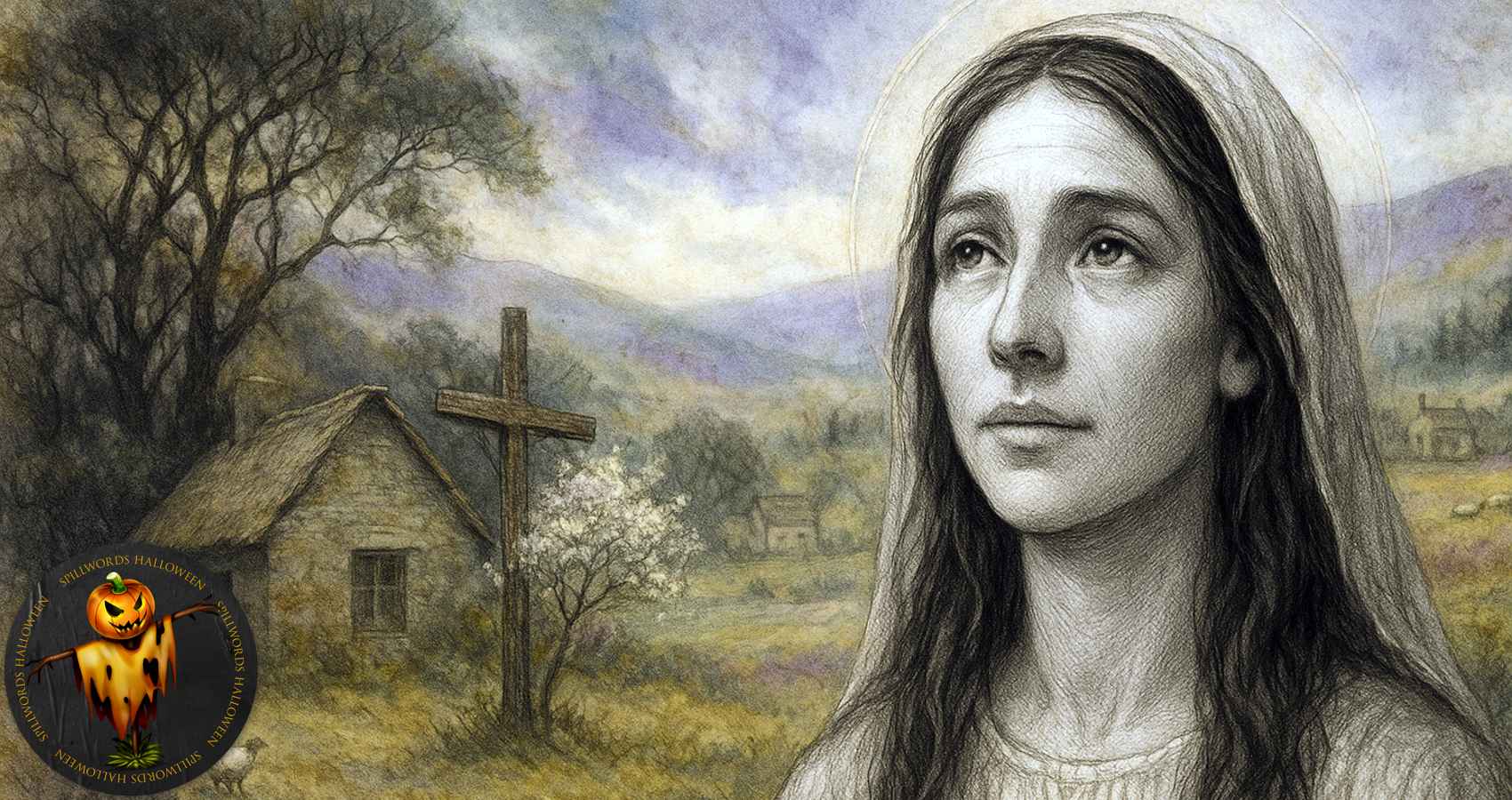
It was fear of the unknown. She had come to the village as a teenager, speaking of her Father in heaven. She couldn’t or wouldn’t tell you her name. She seemed to subsist on bread and water. She told of the kingdom where all would live in everlasting joy. She was otherworldly. There was a small cottage on the edge of the woods where she would go when the sun was setting, and from which she emerged when she would be up and out at dawn, roaming the hills, talking with the sheep and cows and geese, and every animal she encountered. They all mellowed at her voice. They sometimes lay at her feet. She fed them her bread and sometimes sang to them. The sheep herders were mesmerized by her voice and would come as close as they dared when she was in their midst. No one knew where she came from, if she had parents somewhere, or siblings. She was gentle and kind to all. Occasionally, someone would come upon her in the woods, where she would be kneeling and praying in front of a roughly hewn cross, nailed to a tree. She wore skirts that fell to her ankles, a blouse of white cotton, and a veil over her long dark tresses. Her sandals were of leather but looked like they’d travelled many miles through mud and sand. She had appeared suddenly, one day in April, when the flowers were beginning to bud, and the trees were blooming. She rarely answered questions, except to assure the people that they were living in the light of the Lord. No one could find fault with her, but there was lingering doubt of her intentions. They’d never been in the presence of one so other-worldly. They were beginning to think she was a witch. Murmurs were heard when she passed through the village to buy ingredients for the bread she would always be carrying with her, wrapped in brown paper. She would offer it to anyone who approached her, but they always turned away, afraid to be poisoned or to fall under her spell.
The rumors were beginning to be louder and more confident. People gathered in taverns and the village green to voice their concerns. Where was she from? What was the meaning of her visit to this spot, in the heart of the highlands of Scotland? She had no work that they could see. They had no idea where her few coins came from when buying her packages from the grocer. A few women had approached her with the intentions of finding out some answers, pretending to offer friendship or motherly advice, but she would just smile gently, offer them some of her bread, and beg their pardon as she had to go speak with her Father, in heaven. It was too mysterious for the likes of these villagers. Their kind interest turned to rancor. If she would not answer their questions and explain her presence, they would need to deliver themselves from this evil. They were righteous and deliberate in their agreement. For once, the townspeople came together in a unified decision. She would be tied to a stake and burned to save themselves from the oaths they were sure she was making with the devil, plotting against them. Despite all her seeming goodness, they believed her plan was to trick them and bring spirits of destruction to them. So, they needed to act before her plan was fulfilled.
The children were put to bed early the night of the horrible deed, when they went to her cottage, seized her, dragged her into the town square, tied her to the stake, and set her on fire. The adults stood in a circle around her, watching her skirt catch fire, her face glowing with an eerie light, her lips whispering words they could not hear, and the final smile on her face as her body became unrecognizable in the flames. When the fire died down, they doused the remaining embers with buckets of water, took what was left of her bones, put them into a heavy oaken casket, and buried her deep in the ground of the cemetery. They covered the casket with mounds of dirt, and sprinkled grass seed on top. Then the welder brought iron strips to cover the mound, to form a cage, to keep any possibility of escape if the witch was able to reconstruct her bones into a live being again. An unmarked tombstone stood at the head of the plot, with only the date of her death.
They were satisfied. She was gone. They were joyous, celebrating with music, food, and dancing. The summer and fall, and winter passed with no more concerns of that unknown visitor. But when spring came, the flowers did not bloom, the trees did not show their foliage, the cows did not give milk, the sheep were lean and did not eat, the wheat did not grow. The villagers could not understand what they had done to bring on such devastation to their lives. There was just one tree, in the woods, with a cross nailed to its trunk, that bore flowers and fruit, raising its branches to the sky, and scenting the air with a mysterious, captivating fragrance. And in the cottage where the girl had made her bread and slept, they found her sandals neatly placed at the foot of the bed, and words carved into the table that said, “The Spirit of the Sovereign LORD is upon me, for the LORD has anointed me to bring good news to the poor. He has sent me to comfort the brokenhearted and to proclaim that captives will be released and prisoners will be freed.”
And the villagers understood their mistake and wept with a wailing you can hear to this day, in the wind that shakes their homes every springtime, in the highlands of Scotland.

- The Innkeeper’s Wife - December 20, 2025
- Fear of The Unknown - October 19, 2025