

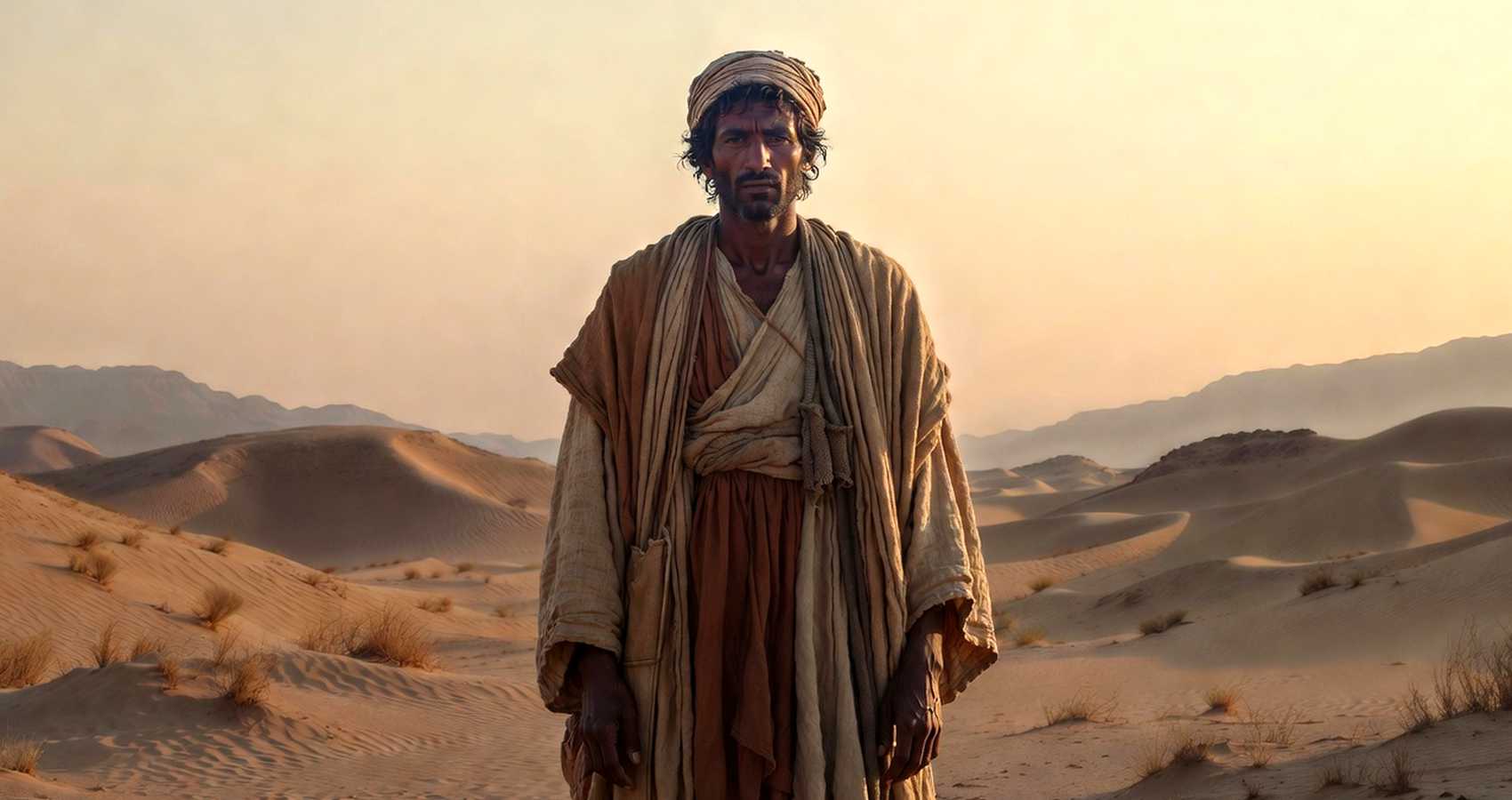
The Sad Tale of Shazam the Wandering Hematite
written by: Lot Hildegard
If you know your Bible, you’re familiar with Genesis 34, the gruesomely compelling account of the rape of Jacob’s daughter Dinah by Shechem the Hivite, who falls in love with her and asks for her hand in marriage. Her devious brothers, bent on vengeance, agree to the alliance and intermarriage of the two peoples, stipulating that the Hivites must first undergo circumcision. The Hivites, dazzled by the prospect of gaining a lot of wealthy new kin and nailing all those Jewish girls, readily agree to the anatomical requirements and are subsequently slain by Dinah’s brothers while in the throes of the procedure’s immobilizing aftermath, whereupon the popularity of the Hebrews in that neighborhood declines precipitously.
If you know your American history, you’re familiar with Dr. Samuel Mudd, who treated John Wilkes Booth’s broken leg and was soon tossed into the slammer in the Dry Tortugas, where he remained incarcerated in grim conditions until being released as a reward for services performed during a yellow fever epidemic.
I, Shazam the son of Hazmat, am the Mudd of my people, but alas, my Tortugas remain dry.
My people, the Hematites, dwelt near the Hebrews and the Hivites and were the only folk in the area other than the Jews who practiced circumcision. We never knew exactly why the Jews did it. We did it because our chronicler, a sage named Khazmo, had surveyed all the women and learned that a majority preferred the fit-and-trim experience.
Thus it was that we, as neutrals schooled in the ways of penile pruning, were asked to take the Hivites in hand. Any Hebrew who performed such a procedure on a large contingent of foreigners would have been considered ritually unclean until the bullocks came home, and in any case, the Hivites understandably didn’t care to present their vulnerable phalli to an offended party who might decide to cut a little too deep. It’s not like you can say “Slippance” and start over in a situation like that.
At the time, I was a senior intern with our tribe’s most prestigious circumciser, who always liked to delegate the dirty jobs. Off I went, with the glad tidings of a group discount and the sweeping-up of all clippings. It was a long day for all concerned, but the men were buoyed by hopes for booty of various kinds.
You know what happened three days later, when Dinah’s brothers walked away from the carnage, wiping their gory knives and muttering, “Shechem if they can’t take a joke.” By then, I had problems of my own.
There was, of course, the immediate trauma of the after-image: Whenever I closed my eyes, I saw on the inside of my eyelids the pageant of an almost endless queue of bare pizzles, all the way up a long street and around the corner. And of course, you can well imagine what my dreams were like at night, especially since the soundtrack included the incessant repetition of all the nervous jokes from the fellows waiting in line.
But the most dire consequences were social:
My people, happy enough to make a shekel off of the Hivites, now turned on me for having abetted their slaughter. The other local tribes joined in the opprobrium. The Hebrews, having found me useful, now considered me unclean and of lesser repute than a pig with a mouthful of shellfish. There I’d been, on the cusp of a stellar career, and now here I was, a pariah all around.
Physical disabilities reinforced my awkward position. If you’ve ever circumcised hundreds of men in one afternoon, you know what it can do to your fingers and wrists. The pain and stiffness made it impossible for me to shake hands, which gave me a reputation for standoffishness, and carpal tunnel problems prevented me from closing my fingers in a fist bump, which led to my being considered not only unfriendly but uncool.
Luckily, I was quite proficient at playing the kharhkh, the nine-stringed musical instrument of my people. If you’ve ever played the kharhkh, you know that a claw-hammer hand shape is conducive to competent musicianship, and this was what saved me when I was cast out of the community and compelled to wander the earth, busking for small change in the gates of most of the great cities of the East and not a few of the lesser ones. At each stop, my story would eventually catch up with me, and I would be forced to move on. As empires rose and fell, I sometimes found work as an interpreter, which meant I was also shunned as a collaborator. Even the feral dogs treated me as an inferior being, and if you’ve ever seen one of those disgusting Middle Eastern feral dogs, you can imagine how galling it is to have one of them high-hat you.
I suppose you’ve heard of Ahasuerus the Wandering Jew. If you know your myths and legends, you recall that he was condemned to roam the earth for all time to come. Verily, I am the Ahasuerus of my people, Shazam the Wandering Hematite.
Recollecting Dr. Mudd as a beneficiary of an epidemic, I hoped Covid would bring my deliverance, for my hands had largely recovered by then. Indeed, it might be that the masked man who put your baby boy (or perhaps yourself or a friend) in peak condition during those grim months was I. But my hopes were misplaced. While I no longer see an interminable train of todgers when I close my eyes, my ears resound to the eternal refrain, “Hey, aren’t you the guy who…” that keeps me traveling light.
There’s no acceptance anywhere, and somebody always nicknames me Cutter. If you know your Bible, you know it’s not right to behave like that.
Still, there might be a silver lining: I certainly have learned how to sing a lament convincingly, and there aren’t many kharhkh players around nowadays. I just bought a one-way ticket to Nashville. Wish me luck.

- The Sad Tale of Shazam the Wandering Hematite - March 3, 2026
- The Boy Who Couldn’t Rhyme - October 11, 2025
- When the Shoe Drops - July 28, 2025