

Northern Bayou
written by: Genesio Zenone
The wind comes off Lake Champlain with just enough weight to lean against. Cattails line the road. The air smells like restless water.
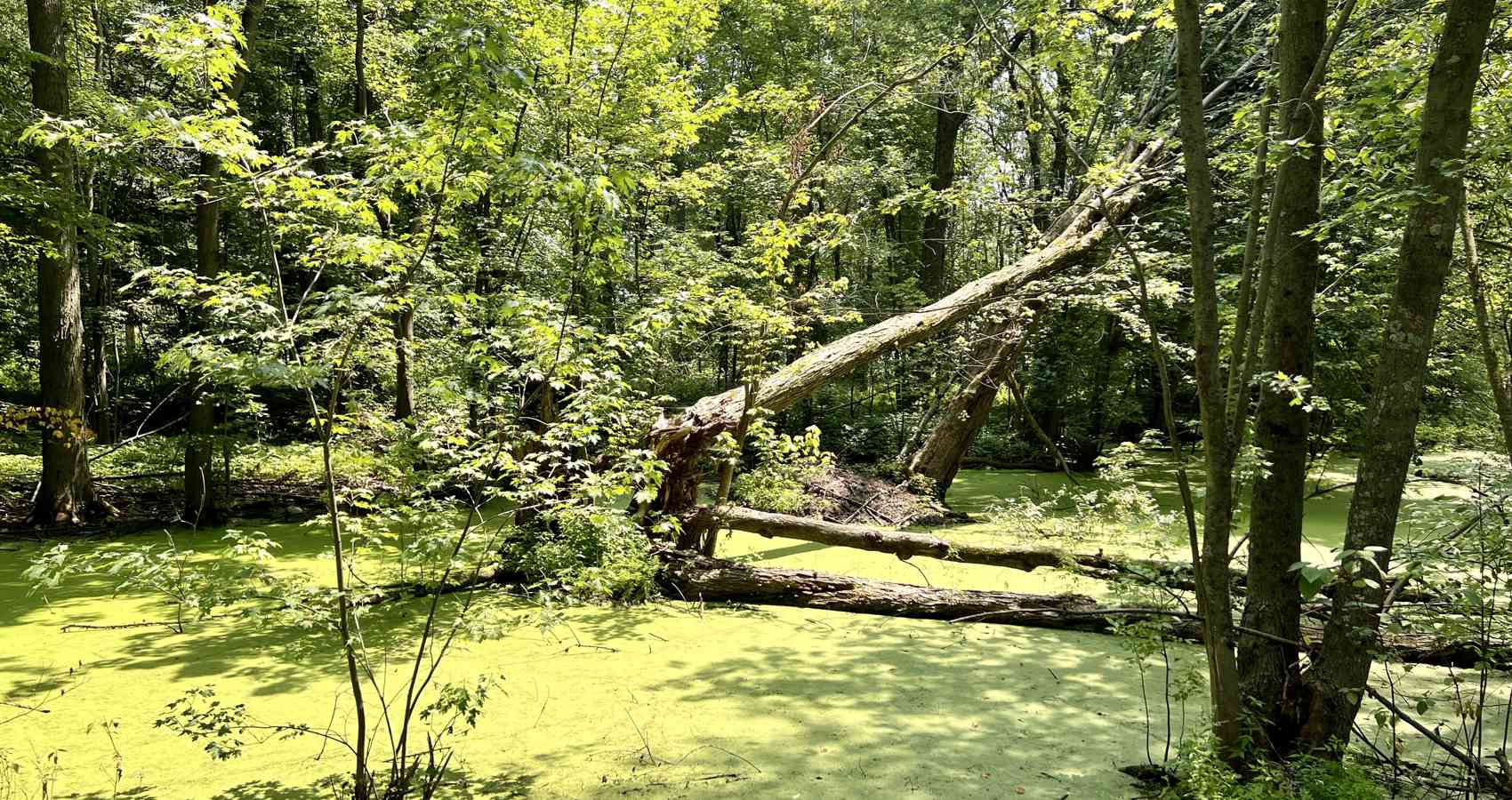
It isn’t a bayou. But it feels like an echo of one.
The same waterlogged patience. A place half-drowned in water and memory, where nothing moves quickly—the water decides first, and everything else adjusts.
I started riding there during COVID, coming up from New York City, where I’d been living for a decade. But the place had been waiting longer. When I was a kid, my mother lobbied persistently to get us a camp on Grand Isle. Not to leave Montreal, where we were living—just to have somewhere different to go. She used to tell stories about it. Recruiting me, really. Some future disaster—pandemic, war, whatever came first—and we’d go there. Ride it out.
And in time, I did.
I found my brother’s old Norco in the shed. The chain was rusty, the tires soft, the rear wheel not quite true, and the grips worn smooth where his hands had been. I aired it up and started riding.
Every ride began on Line Road, dirt under the tires, the line between Canada and the United States.
Out past Alburgh, the land begins to loosen. Water everywhere, even when you can’t see it. Ditches holding dark, still water. Marsh grass leaning sideways in the wind. Reeds taller than your handlebars. Once, a heron lifted off just ahead of me—slow, prehistoric, faintly irritated—as if I’d interrupted something that had been happening there long before I arrived.
On a bike, you start noticing names—on road signs, on farms. Martel. Bruley. Deslauriers. The French hasn’t disappeared—it’s just been worn down, like lettering on an old sign. It lingers on mailboxes, in the angles of farmhouses that look faintly borrowed from the St. Lawrence, in the occasional muttered tabarnak slipping out of a barn when someone thinks no one’s close enough to hear.
You ride out toward Isle La Motte and stop at Saint Anne’s Shrine. Lean the bike against a tree. Walk the gravel in shoes that don’t belong there. The place has been sitting right on the water since 1666—stone, weathered wood, candles burning even when no one’s around. It’s quiet in a way that feels maintained. Not preserved. Maintained. As if it has continued without needing to explain itself.
For a minute, it feels less like a place you’ve arrived at than one you’ve stepped into—something already in motion, indifferent to your presence. There before you, there after, maybe there in spite of you.
And then, just as quickly, you’re reminded this is not Quebec.
There’s an individualism here that doesn’t announce itself. It just is. Houses sit back from the road like they’ve chosen distance on principle. You pass a man haying a field with an ancient tractor coughing along; he raises an index finger from the wheel but doesn’t stop. Every so often, a Confederate flag appears—never quite where you expect it, never fully explained. Not loud. Just there. Like a piece of history that failed geography.
Everyone seems to know exactly what used to be where—who owned which field, when the road washed out, how the shoreline used to run before the last big storm. The past isn’t archived here so much as carried, casually, in conversation.
With it comes a mild, persistent suspicion of people from away. Not in anything anyone says directly, but in how things are said around you. Who’s buying what. Who’s been here how long. They’ll still sell you blueberries warm from the sun, let you fill your bottle, point you down the right road. But you are from away, and away is where you will always be from.
On the Alburgh Recreational Trail, running through Alburgh toward the islands, the land opens completely. Wind from the side now. Then behind you. Then in your face again, like it can’t quite decide what it thinks of you. You ride into it anyway.
At one point I realized I’d been riding for twenty minutes without seeing a single car—just the sound of the chain and the wind working the reeds like it had something to finish.
Somewhere along there, I understood what my mother had been trying to describe all those years. Not safety, exactly. Something looser. You notice the way the light changes over the lake in increments. How the sunsets don’t arrive so much as accumulate—until suddenly the whole horizon catches, and bleeds into the water.
And no one bothers you. No one asks where you’re going. Movement is enough explanation.
It is, in its way, a northern bayou. Not in geography, but in temperament. Same slow-water logic. Same resistance to being hurried or fully known. Just colder. Quieter. Translated.
The chain skipped once, then caught, and I rode back toward the camp, where my mom was already in the water, a Heineken warming on the dock in the sun.

- Northern Bayou - July 30, 2026